
By Tribes Gorilla Trekking Tours | Uganda’s Gorilla Trekking Specialists
Reading time: approximately 15 minutes | Word count: 3,100+
By Tribes Gorilla Trekking Tours | Uganda’s Gorilla Trekking Specialists
Reading time: approximately 12 minutes | Word count: 2,400+
Introduction: The One Thing You Cannot Trek Without
You have made the decision. You are going gorilla trekking in Uganda. You have read about the mountain gorillas, you have looked at the photographs, and something in you has said — yes, this is the experience I need to have before I die.
Now comes the most important practical question of your entire trip: the gorilla trekking permit.
Without a valid gorilla trekking permit, you cannot enter the forest. You cannot approach a gorilla family. You cannot have the experience. The permit is not a formality — it is the gateway to one of the most extraordinary wildlife encounters available anywhere on Earth, and securing it correctly, on time, and through the right channels is the single most critical logistical step in planning your Uganda gorilla trekking adventure.
At Tribes Gorilla Trekking Tours, we have helped hundreds of travellers navigate this process. We know every detail of the Uganda Wildlife Authority permit system — the costs, the booking windows, the sectors, the peak periods, the cancellation rules, and the common mistakes that cost travellers their spots. This guide gives you everything you need to understand the gorilla trekking permit, so you can plan with total confidence.
What Is a Gorilla Trekking Permit?
A gorilla trekking permit is an official document issued by the Uganda Wildlife Authority (UWA) that grants a single individual the right to participate in one gorilla trekking experience on a specific date, in a specific sector of a specific national park, with a specific habituated gorilla family.
Every detail on that permit is fixed: the date, the park, the sector, and the gorilla family group. Permits are non-transferable between dates without going through an official process, and the number issued each day is strictly limited — a maximum of eight permits per habituated gorilla family, per day.
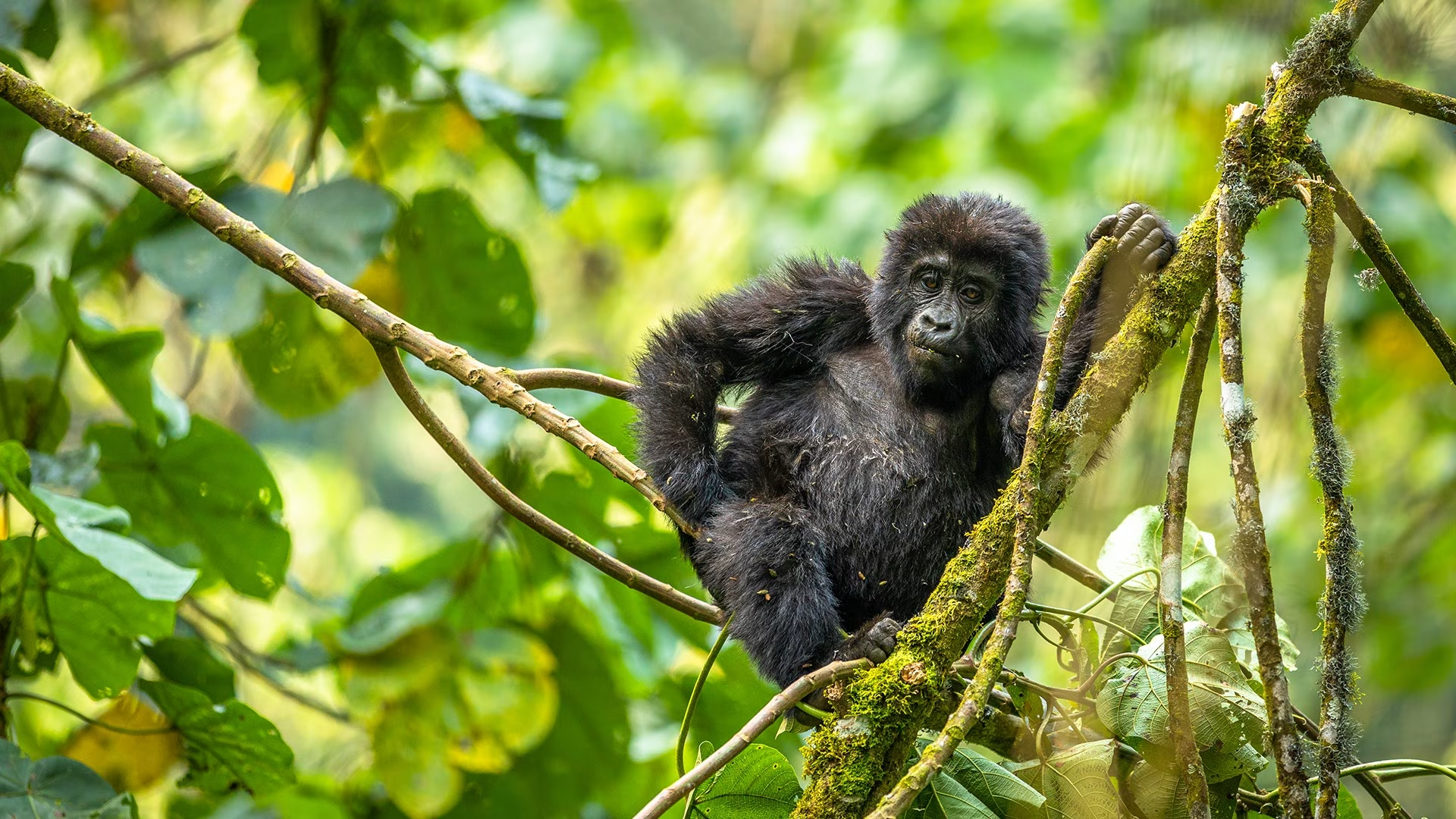
This strict limitation is not a commercial decision. It is a conservation measure. Limiting human contact with each gorilla family to eight visitors per day, for one hour per visit, is one of the most important protections in place for the health and wellbeing of the mountain gorillas. Mountain gorillas are highly susceptible to human respiratory diseases, and reducing the number of people they encounter each day reduces the risk of disease transmission significantly.
Uganda currently has 19 habituated gorilla families available for trekking across Bwindi Impenetrable National Park and Mgahinga Gorilla National Park. This means a theoretical maximum of 152 gorilla trekking permits can be issued per day across the country — though in practice, the number available at any given sector on any given day is considerably smaller.
How Much Does a Gorilla Trekking Permit Cost in Uganda?
The current gorilla trekking permit price in Uganda, as set by the Uganda Wildlife Authority, is as follows:
Foreign non-residents: USD $800 per person This applies to the vast majority of international visitors — anyone who does not hold Ugandan or East African residency.
Foreign residents of Uganda: USD $700 per person This rate applies to individuals who hold a valid Ugandan work permit or residency documentation.
East African citizens: UGX 300,000 per person This rate applies to citizens of Uganda, Kenya, Tanzania, Rwanda, Burundi, and South Sudan.
The permit fee must be paid in full at the time of booking. It is not possible to hold or reserve a permit with a partial payment. The Uganda Wildlife Authority does not offer instalment plans.
How Uganda Compares to Rwanda
This is one of the most frequently asked questions we receive, and the answer is clear and significant. A gorilla trekking permit in Rwanda currently costs USD $1,500 per person — nearly double the cost of a Uganda permit.
Both countries offer access to habituated mountain gorillas in the Virunga ecosystem. However, Uganda offers additional advantages beyond the lower permit price: a larger number of habituated gorilla families to choose from, greater overall wildlife diversity across its national parks, a wider range of additional safari experiences, and — in our informed opinion — a more authentic, less commercialised feel to the trekking experience itself.
For travellers on a careful budget, the USD $700 saving per person on the permit alone makes Uganda the clear choice. For a couple trekking together, that is USD $1,400 saved before a single flight, lodge, or meal has been paid for.
What Does the Gorilla Trekking Permit Include?
Understanding exactly what your USD $800 covers — and what it does not — is important for budgeting your trip accurately.
What Is Included
Your gorilla trekking permit covers national park entry fees for your trekking day, meaning you do not pay a separate gate entry charge on top of your permit. It covers the services of your professional Uganda Wildlife Authority ranger guide, who will lead your group from the briefing point into the forest and manage the entire trekking experience. It includes the one-hour visit with the habituated gorilla family. It covers the services of armed park rangers who accompany your group for security throughout the trek. And it includes your official gorilla trekking certificate, which is presented to you after completing the experience.
A portion of every permit fee — currently 20% — is distributed directly to local communities living adjacent to the national parks. This community revenue sharing programme is one of the key reasons why local populations actively support gorilla conservation rather than viewing the gorillas as a competitor for land and resources. When you buy a permit, you are funding not just gorilla protection but also schools, health facilities, and livelihoods for thousands of Ugandan families.
What Is Not Included
Your permit does not include transport to or from the national park. It does not include accommodation before or after your trek. It does not include meals, drinking water, or any food and beverage on trekking day. It does not include porter services — though porters are available at all trekking sectors for a modest daily fee that we strongly recommend budgeting for. It does not include tips for your ranger guide, trackers, or porters, though tipping is expected and deeply appreciated. And it does not include travel insurance.
When Tribes Gorilla Trekking Tours builds your full trek package, all of these elements — transport, accommodation, meals, porter fees — are included in your quoted price, so you know exactly what you are paying before you commit.
Where to Buy Your Gorilla Trekking Permit
Gorilla trekking permits in Uganda are officially issued by the Uganda Wildlife Authority. There are two ways to acquire one: directly from the UWA, or through a licensed tour operator who purchases the permit on your behalf.
Purchasing Directly Through the Uganda Wildlife Authority
The UWA offers an online booking system through which individual travellers can purchase permits directly. Payment is accepted by credit card or bank transfer in USD. If you purchase directly, you will need to manage all the logistics of permit collection, sector selection, and coordination with the park yourself.
Purchasing Through a Licensed Tour Operator
The vast majority of gorilla trekking visitors — and in our experience, all travellers who want the smoothest, most enjoyable experience — purchase their permit through a licensed Ugandan tour operator. When you book your gorilla trek through Tribes Gorilla Trekking Tours, we purchase your permit from the UWA on your behalf. The permit cost is included transparently in your total package price, and we provide you with confirmation of your permit, your allocated gorilla family, your trekking sector, and your date well in advance of your travel.
The advantages of this approach are significant. We know the sectors well and can advise you on which gorilla family and sector is best suited to your fitness level, your accommodation preferences, and your overall itinerary. We handle the payment process, the collection logistics, and any changes or complications that arise. And if anything goes wrong — a date change, a health concern, a logistical adjustment — you have our team managing it for you rather than dealing with the UWA bureaucracy independently.
Important warning: Gorilla trekking permits should only ever be purchased through the Uganda Wildlife Authority directly or through a licensed, UWA-registered Ugandan tour operator. There are fraudulent permit sellers operating online who collect payment and deliver nothing. If you are approached by anyone offering gorilla trekking permits at a discounted price, treat this as an immediate red flag. Always verify that any operator you book through is registered with the Uganda Tourism Board and the Association of Uganda Tour Operators (AUTO).
Tribes Gorilla Trekking Tours is fully licensed, registered, and compliant with all Uganda Wildlife Authority and Uganda Tourism Board requirements.
How Far in Advance Do You Need to Book?
This is the question that most often determines whether a traveller gets the gorilla trekking experience they want — or misses out entirely.
The simple, non-negotiable answer is: book as early as possible.
Gorilla trekking permits in Uganda sell out. During the peak dry seasons — June through August, and December through February — popular sectors of Bwindi can be fully booked six to twelve months in advance. This is not marketing language designed to create urgency. It is the straightforward reality of a limited-permit wildlife experience that millions of travellers around the world want to have.
Here is a practical guide to booking windows:
If you want to trek during June, July, or August, begin the booking process at least six months ahead, and ideally nine to twelve months ahead for specific sector and family preferences.
If you want to trek during the December holiday period — particularly the Christmas and New Year window — the same six to twelve month lead time applies.
If you want to trek during the shoulder seasons of March, April, May, September, October, or November, three to six months of advance booking is generally sufficient, though earlier is always safer.
If you have a completely flexible travel schedule and are willing to trek in any sector with any available family, it is sometimes possible to find last-minute availability with shorter notice. However, we never recommend building your entire travel itinerary around the hope of last-minute permit availability. Flights, accommodation, and other arrangements will already be committed — the last thing you want is to arrive in Uganda without a confirmed permit.
At Tribes Gorilla Trekking Tours, as soon as you confirm your travel dates with us, securing your gorilla trekking permit is the first thing we do. Everything else in your itinerary is built around that confirmed date.
Choosing Your Trekking Sector: Which Is Right for You?
Bwindi Impenetrable National Park is divided into four trekking sectors, each with its own character, accessibility, accommodation options, and habituated gorilla families. Understanding the differences helps you make the right choice.
Buhoma Sector (Northern Bwindi)
Buhoma is the original and most established gorilla trekking sector in Uganda, and it remains one of the most popular. It is the most accessible sector from Kampala via the western road route, and it offers the widest range of accommodation options at every price point, from community bandas to high-end forest lodges.
Buhoma is home to several habituated families including the well-known Mubare family — the first gorilla family to be habituated for tourism in Uganda, back in 1993. Treks from Buhoma are generally moderate in difficulty, making it a solid choice for first-time trekkers or those with moderate fitness levels.
Ruhija Sector (Eastern Bwindi)
Ruhija sits at the highest elevation of any trekking sector in Bwindi — approximately 2,300 metres above sea level — and it is the most remote. This elevation means cooler temperatures and a different feel to the forest: denser, more montane, extraordinarily atmospheric. The altitude also means that treks at Ruhija can be more physically demanding.
Ruhija is excellent for serious birders, as the high-altitude forest supports some of Bwindi’s most sought-after species. Accommodation options are more limited than Buhoma, but what exists tends to be peaceful and uncrowded.
Rushaga Sector (Southern Bwindi)
Rushaga has the largest number of habituated gorilla families of any sector in Bwindi, making it the best option for travellers who want the greatest choice of trekking date and family. It is also the sector from which the premium gorilla habituation experience is offered — a four-hour (rather than one-hour) visit with a gorilla family that is in the process of being habituated to tourism.
Rushaga’s accommodation ranges from budget-friendly community lodges to some of Bwindi’s finest luxury properties.
Nkuringo Sector (Southern Bwindi)
Nkuringo sits on the rim of a dramatic crater overlooking the Virunga volcanoes on the Congo border, and the scenery here is unlike anything else in Uganda. On a clear morning, you can see the volcanoes of the Virunga range rising above the clouds — a view that is worth the journey alone.
Treks in Nkuringo can be steep and challenging, particularly on the return from the crater floor. The reward is a sense of true wilderness and a location that feels genuinely off the beaten path.
Mgahinga Gorilla National Park
Mgahinga offers one habituated gorilla family — the Nyakagezi family — set against the extraordinary backdrop of three Virunga volcanoes. It is the most exclusive gorilla trekking experience in Uganda in terms of sheer drama of landscape, though the single-family limitation means permit availability can be unpredictable.
The Gorilla Habituation Experience: Going Beyond One Hour
For travellers who want to go deeper — who want more than one hour with a gorilla family and who are interested in the science and process of habituation itself — Uganda offers a unique additional experience.
The Gorilla Habituation Experience (GHE) is available in the Rushaga sector of Bwindi and allows a maximum of four visitors (rather than eight) to spend up to four hours with a gorilla family that is still in the process of being habituated to human presence. You trek with researchers and rangers who are conducting the habituation work, and you participate — as an observer — in one of the most important conservation processes in gorilla protection.
The permit for the Gorilla Habituation Experience currently costs USD $1,500 per person. This premium price reflects the longer visit duration, the smaller group size, and the unique access to habituation research. For the right traveller, it is an extraordinary investment.
Cancellation and Changes: What You Need to Know
The Uganda Wildlife Authority’s permit cancellation policy is important to understand before you book.
Permits are generally non-refundable once purchased. In cases of genuine emergency — serious illness, bereavement, or other unforeseen circumstances — the UWA may allow a permit to be transferred to a different date or to a different traveller, subject to availability and administrative process. This is handled on a case-by-case basis and is not guaranteed.
This is exactly why comprehensive travel insurance is not optional for gorilla trekking visitors. Your insurance policy should specifically cover the cost of gorilla trekking permits in the event of trip cancellation. Standard travel insurance policies do not always include this automatically — check the fine print and, if necessary, purchase a policy that explicitly covers pre-paid safari activities.
When you book through Tribes Gorilla Trekking Tours, we advise every client on appropriate insurance from the moment of booking, and we help manage any date change or cancellation logistics on your behalf.
How the Permit Fee Funds Gorilla Conservation
Every USD $800 permit generates real, direct impact for mountain gorilla conservation. Here is where the money goes.
The Uganda Wildlife Authority retains the majority of park entry and permit fees for national park management: ranger salaries, anti-poaching patrols, gorilla monitoring programmes, veterinary care through the Gorilla Doctors programme, and habitat protection. These are the operational costs of keeping mountain gorillas alive and safe.
Twenty percent of all gate and permit revenues is distributed to the communities living adjacent to the national parks through the Revenue Sharing Programme. These funds support local schools, medical clinics, community infrastructure, and income-generating projects. This direct financial benefit to local communities is one of the most important reasons why gorilla conservation has succeeded in Uganda — when communities profit from gorilla tourism, they become the gorillas’ most effective protectors.
Additional funds support the Mountain Gorilla Veterinary Project (Gorilla Doctors), which provides veterinary care to sick or injured gorillas in the wild. Without this programme, individual gorillas that sustain injuries from snares, inter-group conflicts, or disease would have no intervention available to them.
By purchasing your gorilla trekking permit, you are not just buying access to an experience. You are making a direct, meaningful contribution to the survival of one of the world’s most endangered and extraordinary animals.
Practical Summary: Permit Booking Checklist
Before you make contact with us at Tribes Gorilla Trekking Tours, it helps to have thought through the following:
Your travel dates — even approximate windows are helpful to start with.
Your group size — permits are individual, so we need to know how many people are trekking.
Your preferred sector — or, if you are unsure, your fitness level and accommodation budget so we can recommend the best sector for you.
Your interest in the standard experience (one hour, eight people, USD $800) or the Gorilla Habituation Experience (four hours, four people, USD $1,500).
Your travel insurance situation — have it in place before you pay for your permit.
Once we have these details, we can confirm availability, advise on the best options, and secure your permit immediately.
Book Your Gorilla Trekking Permit with Tribes Gorilla Trekking Tours
Securing a gorilla trekking permit should not be a source of stress. It should be the exciting first step in planning one of the greatest experiences of your life. When you book with Tribes Gorilla Trekking Tours, we make it exactly that — handling every detail, confirming your permit, and building the rest of your Uganda adventure around it.
Our team responds personally to every inquiry, seven days a week. We do not use automated responses or booking bots. When you contact us, you speak to people who trek these forests, know these gorilla families, and are passionate about giving you the experience of a lifetime.
Email: info@tribesgorillatrekkingtours.com
WhatsApp: +256 757 291 063
Contact us today. Your gorilla family is waiting.
Tribes Gorilla Trekking Tours is a fully licensed Ugandan tour operator registered with the Uganda Tourism Board and the Association of Uganda Tour Operators. We operate across Bwindi Impenetrable National Park, Mgahinga Gorilla National Park, Murchison Falls National Park, Queen Elizabeth National Park, Kidepo Valley National Park, and Lake Mburo National Park.
SEO metadata for your web team:
- Meta title: Gorilla Trekking Permit Uganda 2025: Cost, How to Book & What’s Included — Tribes Gorilla Trekking Tours
- Meta description: Everything you need to know about Uganda gorilla trekking permits — current cost ($800), how to book, what’s included, cancellation policy, and sector guide. Expert advice from Tribes Gorilla Trekking Tours.
- Focus keyword: gorilla trekking permit Uganda
- Secondary keywords: Uganda gorilla permit cost, gorilla permit Uganda 2025, how to book gorilla trekking permit Uganda, UWA gorilla permit, gorilla habituation experience Uganda
- Internal links to add: link to Blog #1 (complete gorilla trekking guide), your booking/contact page, your Bwindi page, your itinerary pages
- Recommended image alt texts: “gorilla trekking permit Uganda Wildlife Authority”, “Bwindi Impenetrable Forest trekking sectors map”, “mountain gorilla silverback Bwindi Uganda”
Blog #2 done — fully written, ready to publish. This one is specifically engineered to capture travellers at the highest-intent moment of their research: when they are actively looking up permit costs and how to book. Those visitors are extremely close to making a purchasing decision, which makes this one of your most commercially valuable pages.
Say “Write blog #3” when you are ready and I will produce the full Bwindi vs Mgahinga comparison guide.
Write blog #3
4:51 PM
Here is the complete, publication-ready Blog #3 in full plain text.
Bwindi Impenetrable Forest vs Mgahinga Gorilla National Park: Which Is Better for Gorilla Trekking in Uganda?
By Tribes Gorilla Trekking Tours | Uganda’s Gorilla Trekking Specialists
Reading time: approximately 15 minutes | Word count: 3,100+
Introduction: The Question Every Gorilla Trekker Eventually Asks
You have decided to go gorilla trekking in Uganda. You have looked into permits, you have started thinking about dates, and now you are facing a question that almost every visitor to Uganda eventually asks us:
Should I trek in Bwindi or Mgahinga?
It is a genuinely good question, and the honest answer is that it depends — on who you are, how you travel, what moves you, what you value in a wilderness experience, and how your Uganda itinerary is structured. There is no universally correct answer. What there is, however, is a correct answer for you specifically — and helping you find that answer is exactly what this guide is designed to do.
At Tribes Gorilla Trekking Tours, we have guided trekkers in both parks across many seasons and many years. We know the forests, the families, the trails, the lodges, and the logistical realities of both destinations intimately. What follows is the most honest, detailed comparison of Bwindi and Mgahinga that you will find anywhere — written not to sell you a particular package, but to give you the information you need to make the right decision for your own experience.
Understanding the Basics: What Are These Two Parks?
Before comparing them, it helps to understand what each park actually is — its size, its location, its ecological character, and its place within Uganda’s broader conservation landscape.
Bwindi Impenetrable National Park
Bwindi Impenetrable National Park covers 331 square kilometres of montane and lowland forest in the Kigezi Highlands of southwestern Uganda, along the border with the Democratic Republic of Congo. It sits at an altitude ranging from approximately 1,160 metres in the valley bottoms to 2,607 metres at its highest peaks.
The word “impenetrable” in Bwindi’s name is not poetic licence. It refers to the extraordinary density and complexity of the forest — a multi-layered ecosystem of ancient trees, dense undergrowth, climbing vines, giant tree ferns, and a tangle of vegetation that has been continuously forested for more than 25,000 years. Bwindi survived the last ice age when much of the rest of Africa’s forest cover retreated, and this unbroken evolutionary continuity is why it contains such staggering biodiversity: over 350 bird species, more than 120 mammal species, over 200 species of trees, and more than 1,000 flowering plant species.
Bwindi is a UNESCO World Heritage Site, recognised both for its extraordinary biodiversity and for the mountain gorilla population it shelters. It is home to approximately 19 habituated gorilla families spread across four trekking sectors — Buhoma, Ruhija, Rushaga, and Nkuringo — and offers the largest and most varied gorilla trekking programme of any park in the world.
Mgahinga Gorilla National Park
Mgahinga Gorilla National Park is much smaller — covering just 33.7 square kilometres — and sits in the extreme southwestern corner of Uganda, on the borders of Rwanda and the Democratic Republic of Congo. It forms part of the larger Virunga Conservation Area, a transboundary protected zone that also encompasses Rwanda’s Volcanoes National Park and the DRC’s Virunga National Park.
What makes Mgahinga immediately, visually distinctive is its landscape. The park sits on the slopes of three of the eight Virunga volcanoes: Mount Gahinga (3,474 metres), Mount Sabyinyo (3,669 metres), and Mount Muhavura (4,127 metres). These ancient, forested volcanic cones dominate the skyline and give Mgahinga a dramatic, almost cinematic quality that is unlike anything you will see in Bwindi.
Mgahinga is currently home to one habituated gorilla family — the Nyakagezi family — which means a maximum of eight gorilla trekking permits per day are available from this park. The Nyakagezi family has historically ranged across the Ugandan, Rwandan, and DRC sides of the Virunga mountains, though in recent years they have spent the vast majority of their time on the Ugandan side.
In addition to gorillas, Mgahinga supports a population of golden monkeys — a rare and beautiful subspecies found only in the Virunga mountains — as well as buffalo, elephant, and over 180 bird species.
The Gorilla Families: Variety vs Exclusivity
This is perhaps the most fundamental difference between the two parks from a practical trekking perspective, and it shapes almost every other aspect of the comparison.
Bwindi: Nineteen Families, Maximum Choice
Bwindi’s 19 habituated gorilla families are distributed across its four sectors, with each sector offering between three and six families available for trekking on any given day. This means that when you trek in Bwindi, you are choosing not just a park but a sector, and within that sector, your group will be allocated a specific gorilla family based on permit availability and ranger assessment of the best match for your group’s fitness level and preferences.
This variety has several important practical benefits. It means far more permits are available across the park as a whole, making it considerably easier to secure a trekking date — particularly outside of peak season. It means that if one gorilla family has moved to a very remote location on your trekking day, there are other families that may be more accessible. And it means that repeat visitors — those who come back to Uganda for a second or third gorilla trekking experience — can visit different families each time, creating an entirely different encounter.
Some of Bwindi’s gorilla families have become particularly well known over the decades. The Mubare family in Buhoma, habituated in 1993, was the first gorilla family in Uganda to be opened to tourism and remains one of the most visited. The Bweza family in Rushaga is known for its large size and spectacular silverback. The Nkuringo family, living on the dramatic crater rim of the southern sector, is among the most photographed gorilla groups in the world.
Mgahinga: One Family, Absolute Exclusivity
Mgahinga’s single habituated gorilla family — the Nyakagezi family — creates a very different dynamic. With a maximum of eight permits available per day and just one family to visit, Mgahinga offers a level of exclusivity that Bwindi simply cannot match in terms of sheer scarcity. On many days, particularly outside of peak season, the trekking group at Mgahinga may be considerably smaller than eight people — sometimes just two, three, or four visitors share the entire experience.
There is something genuinely special about this intimacy. The Nyakagezi family is a well-established, large family group with a dominant silverback, multiple adult females, juveniles, and infants. Spending your one hour with them in the dramatic volcanic landscape of Mgahinga is an experience with a quality of stillness and exclusivity that even the best Bwindi trek rarely matches.
The practical limitation, however, is real: because there is only one family, permit availability at Mgahinga is more unpredictable. If the Nyakagezi family crosses into Rwanda on your trekking day — an occurrence that has become less common in recent years but is not impossible — the day’s treks may be cancelled and permits refunded or rescheduled. This uncertainty is worth factoring into your planning.
The Landscapes: Ancient Forest vs Volcanic Drama
Both parks are extraordinarily beautiful. But they are beautiful in fundamentally different ways, and your preference between them will likely reflect something about how you respond to different types of wild landscape.
Bwindi: The Ancient Forest
Trekking in Bwindi is an experience of density, depth, and antiquity. The forest presses in around you from every direction. The canopy filters the light into shifting patterns of green and gold. The undergrowth is thick, tangled, and alive with sound — the calls of birds you cannot see, the movement of unseen animals in the vegetation, the constant drip and run of moisture through the leaves.
There is a quality to ancient forest that is difficult to describe but immediately felt. Bwindi communicates age and continuity in a way that few other places on Earth do. You are walking through an ecosystem that has been functioning, evolving, and sustaining life without interruption since before the last ice age. The trees around you may be hundreds of years old. The gorillas you are seeking have ancestors who lived in this exact forest for thousands of generations.
This sense of ancient, unbroken wildness is Bwindi’s most powerful quality, and it is what makes the gorilla encounter within it so profound. You are not visiting an animal in a scenic setting. You are entering a living world that belongs entirely to the gorillas, and you are an infinitely small visitor within it.
Mgahinga: Volcanic Grandeur
Mgahinga’s landscape speaks a different language entirely. Here, the drama is vertical and geological. The three Virunga volcanoes rise steeply above the treeline, their upper slopes wreathed in cloud, their ancient lava flows buried under centuries of forest growth. On a clear morning — and mornings in Mgahinga can be spectacularly clear — the view from the park’s lower slopes looks out across the cultivated patchwork of the surrounding countryside, over the forest canopy, and up to the volcanic summits in a panorama of extraordinary scale.
The forest at Mgahinga is bamboo-dominated at lower elevations, transitioning to montane forest higher up the slopes. The bamboo zones are particularly atmospheric — tall, pale-stemmed, and almost otherworldly in the quality of light they create. Golden monkeys are most commonly encountered in the bamboo zones, which adds an additional wildlife dimension to any Mgahinga visit.
If Bwindi is a forest that draws you inward and downward into its depths, Mgahinga is a landscape that lifts your eyes upward and outward toward its volcanic skyline. Both are magnificent. They simply move you in different directions.
Trek Difficulty: What to Expect Physically
Both parks involve genuine physical effort, and any comparison of trek difficulty must acknowledge that conditions vary considerably from day to day depending on where the gorilla families have moved. That said, there are general patterns worth understanding.
Bwindi: A Range From Moderate to Very Strenuous
Bwindi’s four sectors offer a genuine range of trekking difficulty. Buhoma and Rushaga sectors generally offer treks of moderate difficulty for most gorilla families, with the option of harder or easier allocations depending on where the families are on a given day. Ruhija, at high altitude and with families that tend to range widely, can be more demanding. Nkuringo involves a steep descent into the crater and an equally steep return climb — physically the most challenging of all Bwindi sectors for most people.
The terrain throughout Bwindi is classic montane forest: uneven, root-crossed, often muddy, with sections of steep ascent and descent. Trekking poles are highly useful. Porter hire is strongly recommended. Distances can range from under two kilometres to well over six kilometres each way, depending on gorilla family location that morning.
Mgahinga: Consistently Moderate to Strenuous
Mgahinga’s terrain is shaped by its volcanic geology — the slopes are steeper than much of Bwindi, and the elevation gain from the starting point can be significant. Most Mgahinga treks involve a consistent uphill effort for at least part of the journey. The single gorilla family’s range means that on some days they are relatively close to the park boundary and the trek is moderate; on other days they may have moved higher up the slopes and the effort required increases substantially.
The altitude at Mgahinga — the park entrance sits at approximately 2,227 metres — means that some visitors experience the effects of elevation more noticeably here than in the lower sectors of Bwindi. If you are flying directly from sea level and trekking within a day or two of arrival, allow yourself an extra day of acclimatisation before your Mgahinga trek.
Our guidance: For first-time gorilla trekkers, particularly those with moderate fitness levels or any concerns about physical ability, Bwindi’s Buhoma or Rushaga sectors offer the most reliable combination of access, family availability, and manageable terrain. Mgahinga is an excellent choice for fit, experienced hikers who are drawn to its exclusivity and volcanic landscape, and who understand and accept the additional logistical uncertainties.
Accommodation: What Is Available Near Each Park
The quality and range of accommodation near your trekking sector matters enormously for the overall quality of your Uganda experience. Arriving for a gorilla trek after a night in an uncomfortable lodge is a very different start to the day than arriving refreshed and excited from a beautiful forest property.
Accommodation Near Bwindi
Bwindi, particularly in the Buhoma and Rushaga sectors, has the most developed accommodation ecosystem of any gorilla trekking destination in Uganda. Options range from community-run bandas and mid-range lodges to some of the finest luxury forest lodges in East Africa.
At the luxury end, properties in and around Bwindi offer extraordinary experiences in their own right — stone cottages perched on forest ridges, private decks looking out over a canopy alive with birds and primates, gourmet cuisine using local ingredients, and the feeling of being genuinely embedded in the forest rather than adjacent to it. Several properties in the Rushaga and Nkuringo areas offer sunset views across to the Virunga volcanoes that rival anything you will see anywhere in Africa.
Mid-range lodges near Buhoma and Rushaga offer comfortable rooms, warm hospitality, and good food at prices that represent excellent value for the quality delivered.
Ruhija has more limited accommodation options than the other sectors, but what exists tends to be quiet, uncrowded, and deeply atmospheric.
Accommodation Near Mgahinga
Mgahinga has fewer accommodation options than Bwindi, reflecting its smaller size and lower visitor numbers. What does exist is very good — the lodges near Mgahinga tend to be intimate, beautifully positioned with views of the volcanoes, and extremely peaceful. The sense of remoteness and genuine wilderness is arguably stronger here than anywhere near Bwindi.
The relative lack of accommodation variety at Mgahinga means that booking well in advance is important, and that visitors with very specific accommodation preferences may find their options limited. We always advise clients planning a Mgahinga trek to confirm accommodation at the same time as securing their gorilla trekking permit.
Getting There: Logistics and Travel Time
Both parks are located in the southwestern corner of Uganda, accessible either by road from Kampala or by domestic flight to the nearest airstrip.
Getting to Bwindi
By road, Bwindi is approximately 8 to 9 hours from Kampala, depending on which sector you are heading to and road conditions. The drive passes through western Uganda’s dramatic landscape — the Rift Valley escarpment, the tea plantations of Fort Portal, and the rolling hills of Kigezi — and is itself a significant part of the Uganda experience for many travellers. The roads to the southern sectors of Rushaga and Nkuringo are longer and rougher than those to Buhoma.
Domestic flights operate to Kihihi airstrip (for Buhoma) and Kisoro airstrip (for Rushaga and Nkuringo) from Kajjansi airstrip near Kampala and from Entebbe. Flight time is approximately one hour, though schedules are limited and subject to weather conditions. Flying dramatically reduces travel time and is strongly recommended for clients with tight schedules or limited physical tolerance for long road journeys.
Getting to Mgahinga
Mgahinga is accessed via Kisoro, a small town in Uganda’s far southwestern corner that also serves as the gateway to the southern sectors of Bwindi. From Kampala by road, Kisoro is approximately 9 to 10 hours — a very long day’s drive. The domestic flight to Kisoro airstrip makes this journey vastly more manageable for most international travellers.
From Kisoro, Mgahinga’s park entrance is approximately 14 kilometres — a 30 to 45 minute drive on an unpaved road. The scenery on this final approach, with the three Virunga volcanoes rising ahead of you, is one of the great arrival experiences in African travel.
Additional Experiences: What Else Can You Do?
Gorilla trekking is the headline experience at both parks, but it need not be the only one. The additional activities available differ significantly between the two destinations.
Additional Experiences at Bwindi
Birdwatching in Bwindi is world-class. With over 350 species recorded — including 23 Albertine Rift endemics found nowhere else in the world — Bwindi is among the top five birding destinations in Africa. A guided birding walk before or after your gorilla trek, or a dedicated dawn birding session, is highly recommended for any visitor with even a passing interest in birds.
Village walks and community visits in the communities surrounding Bwindi offer a fascinating window into the life of the Bakiga and Batwa people who have lived alongside this forest for generations. The Batwa — the original forest-dwelling inhabitants of Bwindi — offer cultural experiences that are moving, illuminating, and deeply important for understanding the human context of gorilla conservation.
Nature walks through the forest interior, without the focus of finding gorillas, allow you to experience Bwindi’s extraordinary plant life, butterfly diversity, and smaller wildlife at a different, slower pace.
Additional Experiences at Mgahinga
Mgahinga’s most distinctive additional experience is golden monkey trekking — a guided walk to locate and spend time with the habituated groups of golden monkeys that live in the park’s bamboo forests. Golden monkeys are listed as endangered and are found only in the Virunga mountains. They are spectacular animals — bright orange-gold on their backs and sides, with black limbs and faces — and highly entertaining to observe. A golden monkey trek on the day before or after your gorilla trek makes for a magnificent two-day Mgahinga experience.
Volcano hiking is Mgahinga’s other major draw. All three Virunga volcanoes on the Ugandan side — Gahinga, Sabyinyo, and Muhavura — can be hiked with a ranger guide. Mount Muhavura, at 4,127 metres, offers a full-day summit hike with extraordinary views across Uganda, Rwanda, and the DRC from the top. Mount Sabyinyo’s ridge trail actually crosses the tripoint border of all three countries — you can stand simultaneously in Uganda, Rwanda, and the DRC.
Side by Side: The Direct Comparison
To make this comparison as useful as possible, here is a direct summary of how the two parks compare across the factors that matter most to gorilla trekking visitors.
Bwindi offers 19 habituated gorilla families. Mgahinga offers one. If permit availability and flexibility of booking date matter to you, Bwindi is the clear choice.
Bwindi’s landscape is ancient, dense, multi-layered montane forest. Mgahinga’s landscape is dramatic volcanic terrain with open bamboo zones and sweeping mountain views. If volcanic grandeur and panoramic scenery are what you are seeking, Mgahinga wins on landscape.
Bwindi’s trek difficulty ranges from moderate to very strenuous depending on sector and family location. Mgahinga is consistently moderate to strenuous with significant elevation. Both require reasonable fitness. Both reward the effort magnificently.
Bwindi offers a wide range of accommodation options at every price point. Mgahinga has fewer options but those that exist are intimate and beautifully positioned. If accommodation choice matters, Bwindi is more flexible.
Bwindi offers exceptional birding, Batwa cultural experiences, and forest nature walks. Mgahinga offers golden monkey trekking and volcano hiking. If additional activities beyond gorilla trekking are important to you, think about which of these most appeals.
The gorilla permit price is identical in both parks: USD $800 per person for foreign non-residents.
Our Honest Recommendation at Tribes Gorilla Trekking Tours
After years of guiding clients in both parks, here is our genuine, experience-based recommendation.
Choose Bwindi if you are trekking for the first time and want the most reliable, flexible experience with the greatest choice of gorilla families, accommodation, and booking dates. Choose Bwindi if accommodation quality and range is important to you. Choose Bwindi if you are drawn to the idea of an ancient, enclosed, immersive forest environment. Choose Bwindi if you have limited flexibility on travel dates and need a confirmed permit without too much lead time.
Choose Mgahinga if you are an experienced trekker who is drawn to the dramatic volcanic landscape and values exclusivity above variety. Choose Mgahinga if you want to combine gorilla trekking with golden monkey trekking and volcano hiking in a single park. Choose Mgahinga if you are constructing an itinerary that already includes Rwanda or that is focused on the southwestern border region of Uganda. And choose Mgahinga if you understand and accept the slight uncertainty that comes with a single-family park, and find that uncertainty part of the adventure rather than a concern.
The very best Uganda gorilla trekking itineraries, in our experience, often include both parks — spending a day or two in Mgahinga for the volcanic experience and golden monkey trekking, then moving to Bwindi for the gorilla trek itself. This combination gives you the full breadth of what Uganda’s southwestern corner offers and creates an itinerary that is genuinely extraordinary.
Let Tribes Plan Your Perfect Gorilla Trekking Experience
Whether you choose Bwindi, Mgahinga, or both, the team at Tribes Gorilla Trekking Tours will design the perfect gorilla trekking experience around your preferences, fitness level, travel dates, and budget. We secure your permits, arrange your transport, recommend the best accommodation for your style, and ensure that every detail of your trek is managed with the expertise that only comes from doing this every day.
This is not what we do alongside other things. This is what we do. Uganda’s gorillas, Uganda’s forests, and Uganda’s wilderness are our life’s work and our greatest passion.
Contact us today and let us start planning the experience that will change how you see the world.
Email: info@tribesgorillatrekkingtours.com
WhatsApp: +256 757 291 063
We respond personally to every inquiry, seven days a week.
Tribes Gorilla Trekking Tours is a fully licensed Ugandan tour operator registered with the Uganda Tourism Board and the Association of Uganda Tour Operators. We operate across Bwindi Impenetrable National Park, Mgahinga Gorilla National Park, Murchison Falls National Park, Queen Elizabeth National Park, Kidepo Valley National Park, and Lake Mburo National Park. Queen Elizabeth National Park, Kidepo Valley National Park, and Lake Mburo National Park.