
Queen Elizabeth National Park, Uganda: Wildlife, Attractions, and Why It Belongs on Every Bucket List
By Tribes Gorilla Trekking Tours | Uganda’s Bush Safari Authority
Reading time: approximately 20 minutes | Word count: 4,200+
Introduction: Uganda’s Most Biodiverse National Park
There is a park in southwestern Uganda that sits at the confluence of two of Africa’s great ecological systems — the East African savannah and the Congolese rainforest — and the result of that collision is something that no other national park on the continent quite replicates.
Queen Elizabeth National Park is Uganda’s most biodiverse protected area. It covers 1,978 square kilometres of savannah, wetland, forest, and crater lake landscape along the floor of the Albertine Rift Valley, straddling the equator between the Rwenzori Mountains to the north and Lake Edward to the south. Within its boundaries, it contains ten distinct ecosystems — an ecological variety that supports the greatest concentration of mammal species of any protected area in East Africa, over 600 bird species making it one of the top ten birding destinations in the world, and a series of wildlife experiences so varied and so extraordinary that it is genuinely possible to spend a week in the park without exhausting what it offers.
Queen Elizabeth is the park where you watch tree-climbing lions draped across the branches of fig trees in the Ishasha sector’s southern plains. It is the park where you take a boat cruise along the Kazinga Channel — a natural waterway connecting Lake George and Lake Edward — past the largest concentration of hippos in Uganda and one of the greatest concentrations anywhere in Africa. It is the park where chimpanzees call from the canopy of Kyambura Gorge and the shoebill hunts in the papyrus swamps of Katwe. It is the park where, in a single day of game viewing, you might encounter elephant, lion, leopard, buffalo, hippo, warthog, Uganda kob, topi, waterbuck, and over a hundred bird species.
At Tribes Gorilla Trekking Tours, Queen Elizabeth National Park is one of the destinations we know most intimately and love most deeply. It sits at the heart of many of our Uganda itineraries, offering wildlife and landscape experiences that complement both gorilla trekking in Bwindi and the savannah drama of Murchison Falls. This is the complete guide to the park — everything you need to plan a visit that does full justice to one of Africa’s most extraordinary protected areas.
The Geography: Understanding Queen Elizabeth National Park
Queen Elizabeth National Park occupies the floor of the Albertine Rift Valley in southwestern Uganda, bordered to the west by the Democratic Republic of Congo, to the north by the Rwenzori Mountains National Park, and to the south by Lake Edward — one of the great African Rift lakes, shared between Uganda and the DRC.
The park’s position at the junction of the East African savannah ecosystem and the Central African forest ecosystem is the fundamental reason for its extraordinary biodiversity. Species from both systems are present, often side by side — open-country antelopes grazing alongside forest specialists, savannah raptors soaring above wetlands that shelter Central African forest birds, chimpanzees in forest ravines a few kilometres from lion prides on open grassland.
The Kazinga Channel
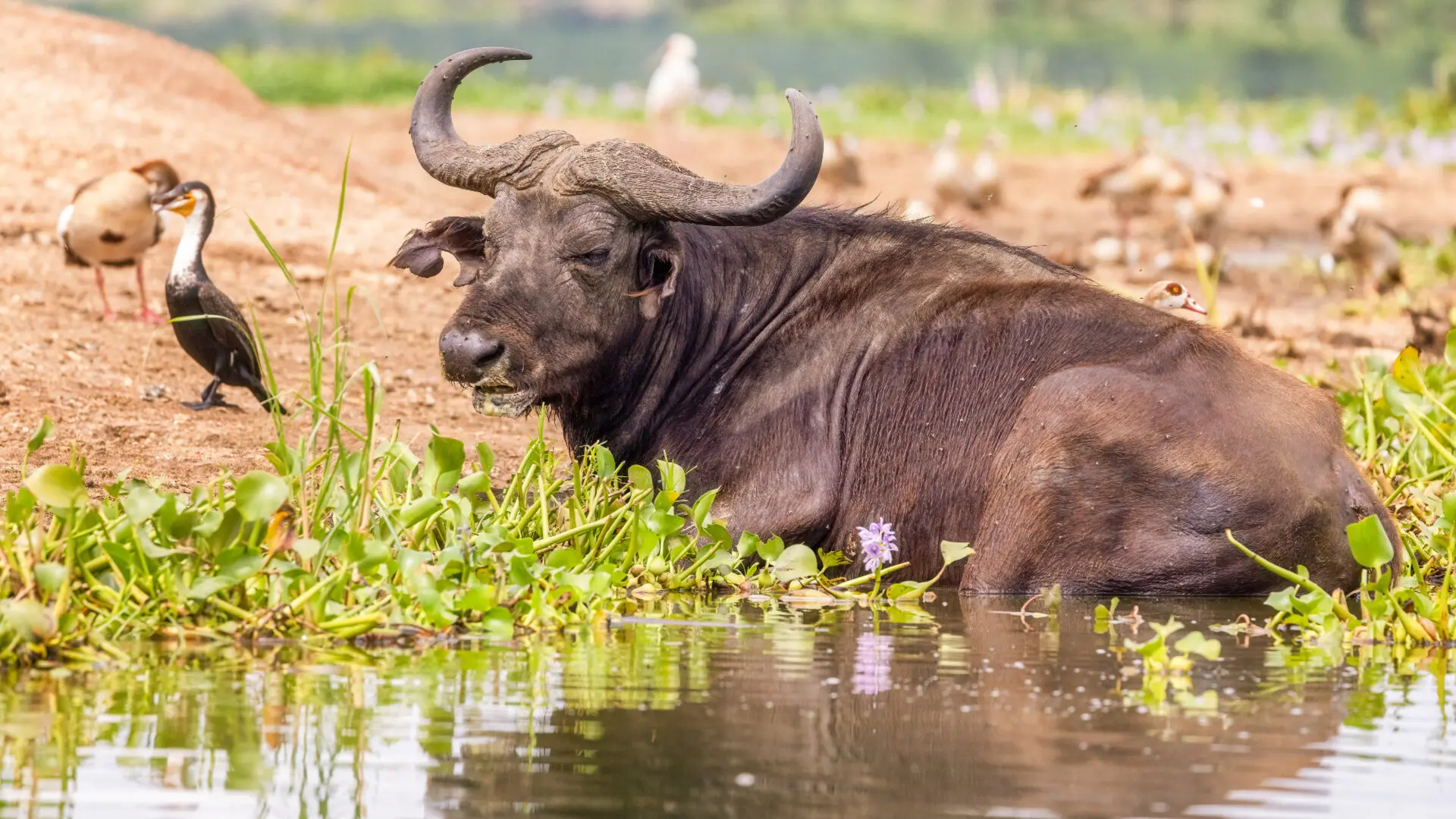
The Kazinga Channel is the geographical feature that most defines the park’s character. This natural, twenty-kilometre waterway connects Lake George in the northeast to Lake Edward in the southwest, and it functions as a permanent water source that draws wildlife from across the entire park ecosystem. The channel’s banks support the highest concentration of hippopotamus in Uganda — estimates suggest over 2,500 individuals — as well as enormous numbers of Nile crocodile, African buffalo, elephant, and the extraordinary diversity of waterbirds that has made the Kazinga Channel famous among birders worldwide.
The Ishasha Sector
The Ishasha sector occupies the park’s remote southern portion, bordering the Democratic Republic of Congo, and is dominated by open savannah interspersed with the giant fig trees in which the park’s famous tree-climbing lion population rests during the heat of the day. Ishasha is separated from the main park area by a significant distance of road and is typically visited as a dedicated extension of a Queen Elizabeth itinerary or as a stop on the overland route between Queen Elizabeth and Bwindi Impenetrable Forest.
Kyambura Gorge
Kyambura Gorge — sometimes called the Valley of the Apes — is a dramatic, forested river gorge that cuts through the savannah landscape of the park’s eastern section. From above, at the gorge rim, you look down into a dense green canyon that descends twenty metres below the surrounding savannah. Inside the gorge, a habituated chimpanzee community and various other primate species live in a forest habitat that feels entirely separate from the open landscape surrounding it.
The Crater Lakes
The northwestern corner of Queen Elizabeth National Park contains a landscape unlike anything else in Uganda: a field of explosion craters — volcanic depressions formed by ancient underground water-meets-magma events — that have filled over centuries to create a series of perfectly circular, intensely coloured crater lakes. The lakes range in colour from brilliant green to deep turquoise to a deep red-brown caused by algae blooms, and they sit in a landscape of rolling green hills and forest patches that is among the most visually beautiful in all of Uganda.
The Wildlife: What You Will Encounter
Queen Elizabeth National Park’s wildlife diversity is its defining characteristic. No other park in Uganda — and few in Africa — supports such a range of species across such varied habitats.
The Tree-Climbing Lions of Ishasha
The tree-climbing lions of Ishasha are, justifiably, one of the most famous wildlife phenomena in East Africa. While lions occasionally climb trees in other parts of Africa, the population in Ishasha does so with a regularity and an extraordinary preference — and that no one has yet completely explained to universal scientific satisfaction. Murchison Falls guide
The most commonly offered explanation is thermal: the breeze in the branches of the tall fig trees is cooler than the ground beneath them, and the elevation above the grass reduces the density of biting insects that plague ground-level lions during the heat of the day. But other lion populations in similarly hot, similarly insect-rich environments do not climb trees with anything approaching the consistency of the Ishasha lions, which suggests that cultural transmission — cubs learning the behaviour from their mothers — plays a significant role in its perpetuation.
Whatever the explanation, the sight of a pride of lions — three, four, sometimes six or seven individuals — draped across the branches of a large fig tree with the magnificent, boneless indolence of the very well-fed is one of the most extraordinary wildlife spectacles available in Uganda. The Ishasha lions are typically found in the umbrella fig trees along the Ntungwe River in the southern Ishasha sector, and sightings, while not guaranteed, are frequent for visitors who spend adequate time searching the tree lines. gorilla trekking guide
The Kazinga Channel Hippo Population
The hippopotamus population of the Kazinga Channel is one of the great concentrations of large mammals anywhere in Africa. Estimates of the channel’s hippo population range from 2,500 to 5,000 individuals depending on season and survey methodology — an almost incomprehensible density of animal biomass in a single twenty-kilometre waterway.
The best way to observe the hippos is from the water — the Kazinga Channel boat cruise brings you to within metres of enormous pods of animals that are too accustomed to the presence of boats to be disturbed by them. What you see from the boat deck is extraordinary: animals piled on top of one another on sandbanks, animals submerged to their nostrils in the shallows, animals erupting from the water in territorial confrontations with neighbours, animals yawning their famous four-foot gapes — a display that is not, despite its appearance, an expression of boredom but a territorial warning of considerable seriousness.
Chimpanzees of Kyambura Gorge
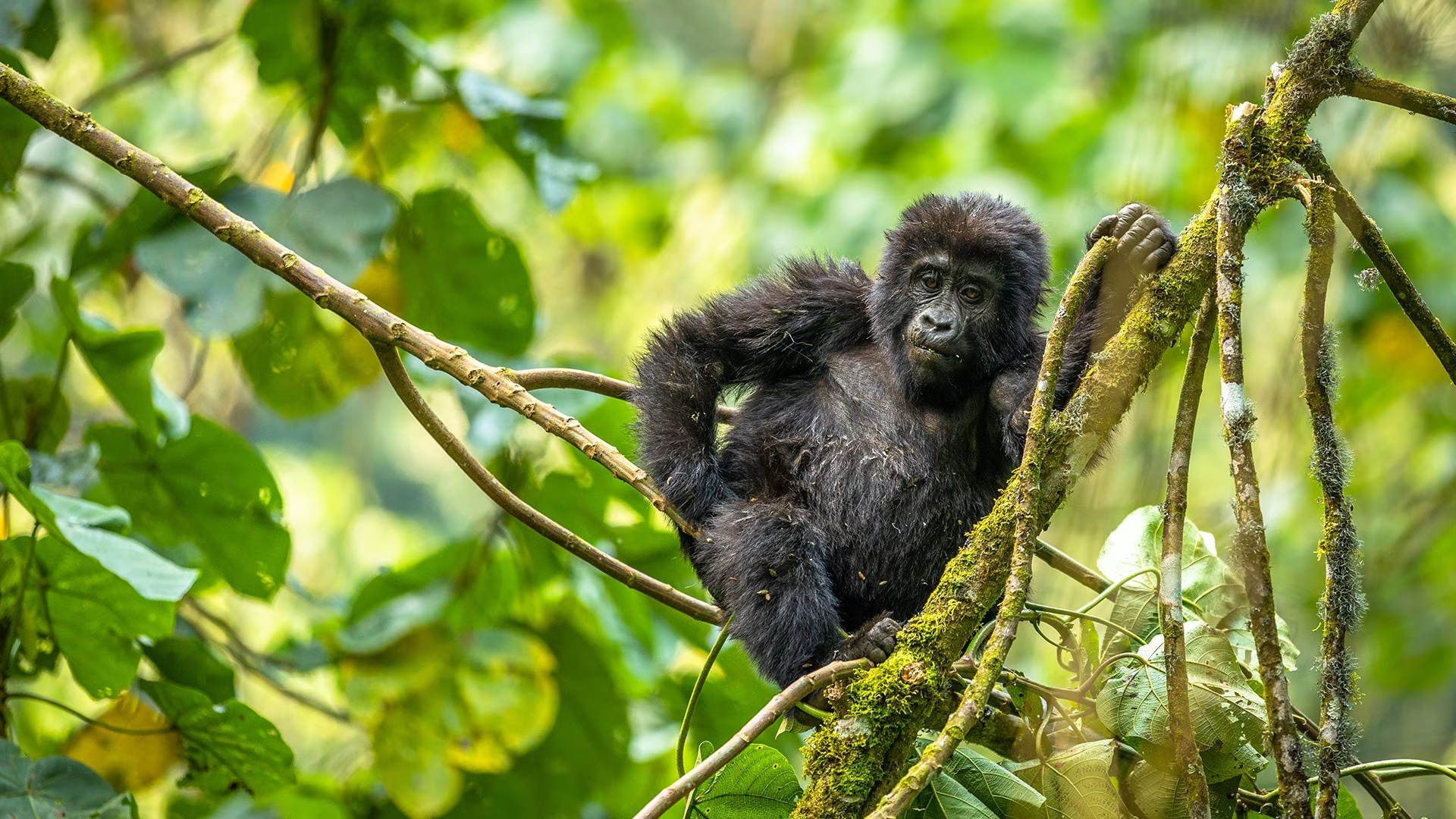
The chimpanzee community of Kyambura Gorge is one of the most accessible habituated chimpanzee groups in Uganda, and the gorge itself adds a dramatic physical dimension to the trekking experience that Budongo and Kibale cannot match.
Descending from the savannah rim into the cool, dense forest of the gorge floor is a transition so sudden and so complete that it feels like entering a different world. The temperature drops. The sound changes from the open, airy quality of the savannah to the enclosed, reverberant acoustic of a forest canyon. And then, somewhere in the canopy above — if the community is in the gorge that day — the chimpanzees announce themselves with the rising, ecstatic pant-hoots that are one of the most thrilling sounds in the natural world.
Chimpanzee trekking in Kyambura Gorge requires a permit arranged through the Uganda Wildlife Authority, which Tribes handles as part of your Queen Elizabeth itinerary. It is important to note that the Kyambura chimpanzee community is relatively small and sometimes ranges beyond the gorge, so sightings, while frequent, are not guaranteed on every visit.
African Elephants
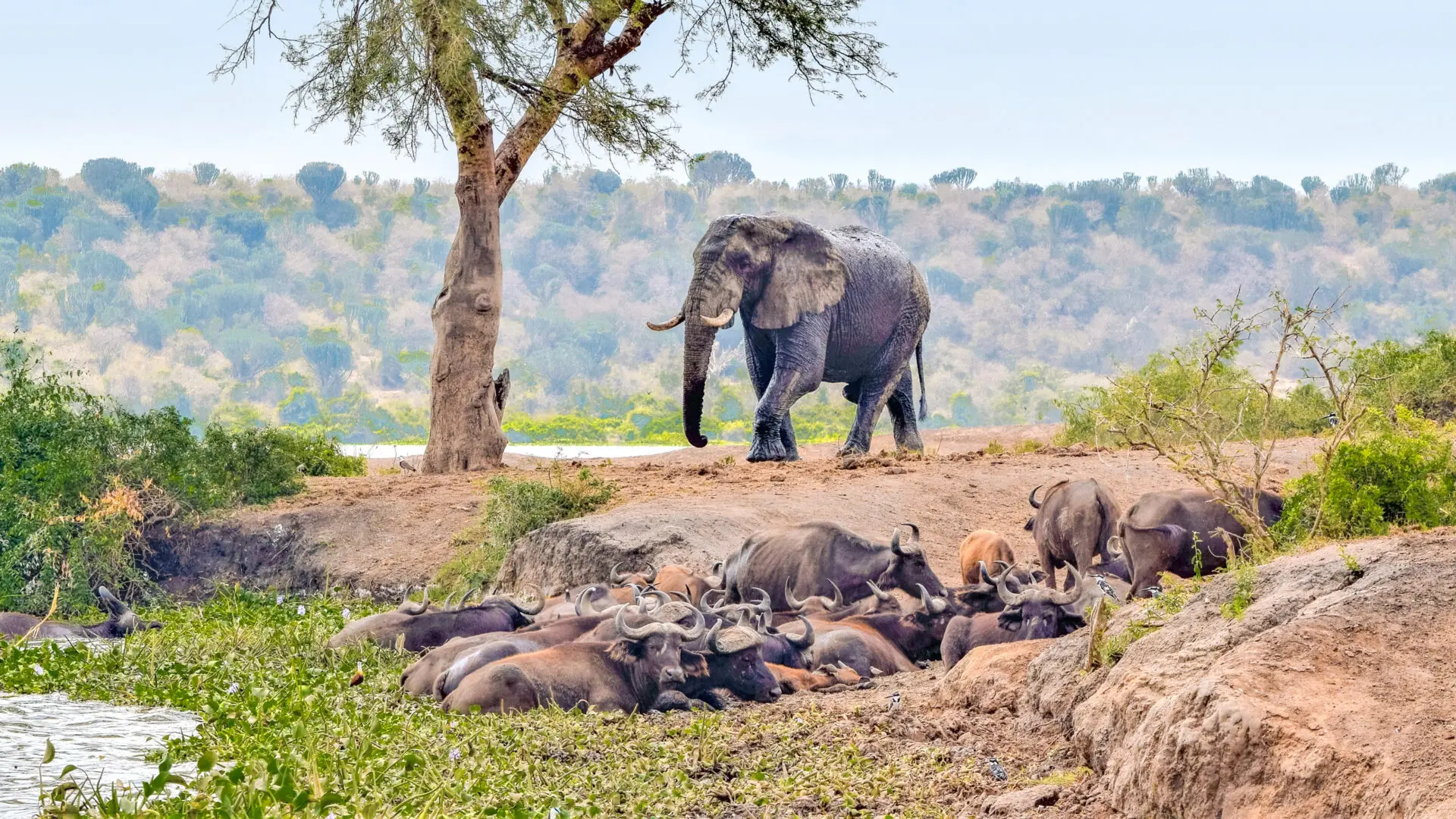
Queen Elizabeth National Park supports one of Uganda’s most important elephant populations, with estimates suggesting over 3,000 individuals across the park’s various sectors. The elephants of Queen Elizabeth are predominantly forest-savannah elephants — slightly smaller than the pure savannah elephants of Murchison Falls but no less impressive for it — and they move freely between the savannah, the forest edges, the crater lake region, and the Maramagambo Forest.
Elephant sightings in Queen Elizabeth are frequent and often close. The animals around the Kazinga Channel are particularly accustomed to vehicles and boats and will often approach within surprisingly short distances without any sign of alarm — offering photography opportunities that would be the highlight of a game drive in many other parks.
Buffalo
African buffalo in Queen Elizabeth occur in some of the largest herds in Uganda. During game drives on the savannah north of the Kazinga Channel, it is not uncommon to encounter herds of several hundred animals — a mass of horns and muscle and movement that creates a dust cloud visible from kilometres away and a sound, when the herd moves, that is felt as much as heard. Buffalo are prey for the park’s lions and are themselves among the most dangerous animals in Africa, but in the context of a vehicle-based game drive they offer spectacular wildlife photography and the particular pleasure of witnessing large-scale, densely social animal behaviour.
Leopard
Queen Elizabeth supports a healthy leopard population — significantly higher in density than most visitors expect given the park’s open character. Leopards in Queen Elizabeth are most commonly encountered in the forest edges, the rocky outcrops of the crater lake region, and the riverine vegetation along the Kazinga Channel. Night drives — available with a special permit arranged through Tribes — offer the best opportunities for leopard sightings, as these animals are primarily nocturnal and considerably more active and visible after dark.
A leopard encounter in Queen Elizabeth — the animal frozen for a moment in the spotlight or caught in the late light of an afternoon game drive, moving through the long grass with its extraordinary fluid economy of movement — is one of the most coveted wildlife sightings in Uganda and one that rewards patient, unhurried game viewing more than almost any other species.
Uganda Kob, Topi, and Waterbuck
The open savannah of Queen Elizabeth supports large populations of medium and large antelope species. Uganda kob — the country’s national animal — grazes in herds of hundreds on the savannah north of the Kazinga Channel. Topi, with their distinctive reddish-brown coats and bluish-grey leg patches, stand sentinel on termite mounds across the grassland. Waterbuck, heavily built and dramatically shaggy, concentrate near the channel and the permanent water sources. Warthog families trot across every open area with their tails raised, endearingly ridiculous and perpetually purposeful.
The Bird Life: Over 600 Species
Queen Elizabeth National Park is a globally significant birding destination — one of the top ten in the world by species count, with over 600 species recorded across its varied habitats. This extraordinary diversity reflects the park’s position at the junction of two major ecological systems and the resulting variety of habitats: savannah, wetland, forest, crater lake, and riverine vegetation each supporting their own specialist bird communities.
The Kazinga Channel is the birding highlight for most visitors: African fish eagles calling from overhanging branches, enormous flocks of pink-backed pelicans on the sandbanks, African skimmers resting in groups on the channel edge, malachite kingfishers hovering above the water surface, African jacanas walking across lily pads on their enormous feet, and the extraordinary African finfoot creeping along the channel banks with the secretive quality of an animal that does not want to be found.
The Maramagambo Forest — a large forest block in the park’s eastern sector — is excellent for forest birds including the African green broadbill, black-and-white casqued hornbill, and various sunbird and weaver species. The crater lake region is good for the African marsh harrier and various waterbird species. And the open savannah delivers classic East African grassland birding: secretary birds, ground hornbills, various eagles and kites, and the spectacular displays of the long-tailed widowbird.
For dedicated birders, Queen Elizabeth is a destination that merits a standalone visit. For wildlife generalists, the quality of the birdwatching is a constant enrichment of every game drive and boat cruise.
The Experiences: What to Do in Queen Elizabeth National Park
The Kazinga Channel Boat Cruise
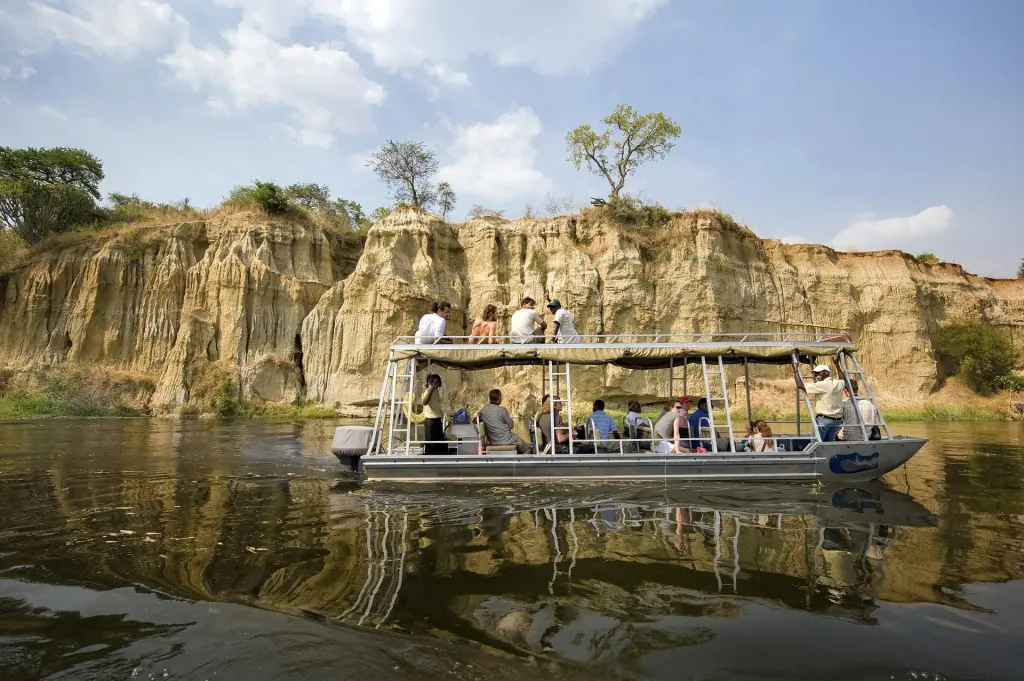
The Kazinga Channel boat cruise is Queen Elizabeth’s most iconic experience — the single activity that most comprehensively and immediately conveys the park’s extraordinary wildlife density and ecological richness.
The standard cruise departs from the channel launch near Mweya and travels along the channel for approximately two hours, with the boat stopping whenever wildlife warrants a longer look. The experience of moving slowly along this waterway — the banks alive on both sides with hippos, crocodiles, elephants, buffalo, waterbirds in extraordinary variety and number — has a quality of ease and abundance that even the best savannah game drive cannot match. The wildlife comes to the channel because it has to. The water draws everything. And the boat allows you to observe it all without disturbing any of it.
The channel cruise is most spectacular in the morning and late afternoon, when the light is best and the animal activity is highest. The midday cruise is less dramatically lit but often very productive in terms of animal activity — hippos are most visible and most vocal in the midday hours when the heat drives terrestrial mammals into shade and the channel becomes the park’s primary centre of activity.
Morning and Evening Game Drives
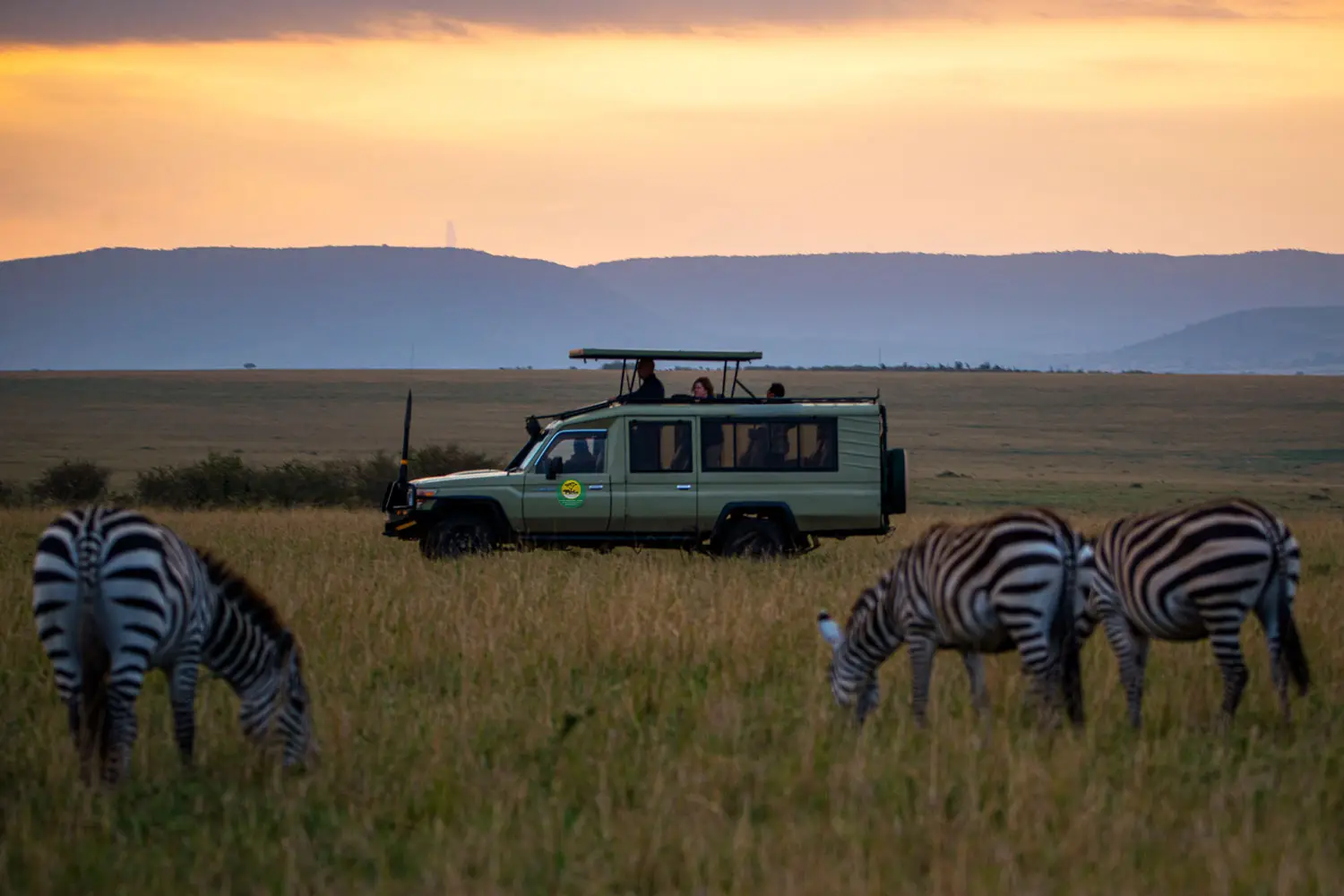
Game drives in Queen Elizabeth are conducted primarily on the savannah north of the Kazinga Channel — the Kasenyi area — which offers the best open-country game viewing and the highest likelihood of lion, leopard, and large antelope encounters. The Ishasha sector to the south requires a separate, longer drive and is typically visited on a dedicated day or as a standalone extension.
Morning game drives beginning before dawn — with the savannah emerging from darkness in the first pale light, lions returning from a night of hunting, kob feeding in the dew-wet grass — offer the best conditions for predator encounters and the most beautiful photographic light. Evening game drives, finishing at the park’s closing time, capture the golden light of late afternoon and the dramatic spectacle of large numbers of animals moving toward the Kazinga Channel to drink.
Ishasha: Tracking the Tree-Climbing Lions
The Ishasha sector is Uganda’s most extraordinary game driving destination and should be considered essential for any visitor spending more than two nights in Queen Elizabeth. The drive from the main park area to Ishasha takes approximately two to three hours, following a road through the southern park and the community land between the two sectors.
In Ishasha, the game drive focuses primarily on the fig tree lines along the Ntungwe River, where the tree-climbing lion prides spend their days. Finding the lions requires patience and sharp eyes — and the assistance of a guide who knows the trees and the prides well. When a pride is found — eight, ten lions distributed across the branches of a single enormous fig tree, tails hanging, eyes half-closed, utterly indifferent to your presence thirty metres below — the experience is one of those rare wildlife moments that bypasses every expectation you arrived with.
Ishasha also offers excellent general game viewing — large herds of Uganda kob, topi, warthog, and buffalo are common on the open plains, and leopard sightings are more frequent in Ishasha than in the main park area.

Chimpanzee Trekking in Kyambura Gorge
The Kyambura Gorge chimpanzee trek begins at the gorge rim, where the open savannah ends abruptly at the edge of the forested canyon. Your ranger guide leads you down into the gorge on a trail that descends steeply through the transition zone between savannah and forest, and then follows the river along the gorge floor through increasingly dense riparian vegetation.
The gorge atmosphere is extraordinary — enclosed, lush, cool, and acoustically alive in a way that the open savannah above it is not. Even before the chimpanzees are found, the birding along the gorge floor is exceptional: African grey parrots fly overhead, various kingfishers work the river margins, and the canopy is alive with smaller forest species.
When the chimpanzee community is located — announced, usually, by the rising calls of the pant-hoot long before they are seen — the experience of watching these animals in the dramatic physical setting of the gorge, with the forest canopy above and the river below and the walls of the canyon framing everything, has a quality that is entirely distinct from chimpanzee trekking in a flat-floored forest and that many of our clients describe as their most powerful primate encounter.
The Crater Lakes: Hiking and Exploration
The explosion crater lakes of northwestern Queen Elizabeth are one of Uganda’s least-visited and most visually stunning landscapes. Driving through the crater lake region — along roads that wind between the perfectly circular depressions, each filled with water of a different shade depending on its depth and algal composition — is an experience that feels genuinely otherworldly.
Several of the crater lakes are accessible on foot, with short hiking trails that descend from the crater rims to the lake shores through forest and open grassland. The most visited is Lake Katwe — a shallow, heavily saline lake with a distinctive deep red coloration caused by halophilic algae, surrounded by the salt extraction operations that have sustained the communities of this area for centuries. The salt of Lake Katwe has been traded across the region for at least five hundred years and visiting the salt works — where workers extract salt using traditional methods unchanged from those their great-grandparents used — is one of the most genuine and least-touristic cultural experiences available in any Ugandan national park.
Lake Nyamunuka, Lake Munyanyange, and the twin lakes of Katanda are among the most beautiful of the crater lakes for hiking and photography. The views from the crater rims — across the lake surfaces to the surrounding landscape, with the Rwenzori Mountains visible to the north and Lake Edward visible to the south on clear days — are extraordinary.
Maramagambo Forest Exploration
The Maramagambo Forest occupies a large block of the park’s eastern sector and is one of the most ecologically important forest habitats in Uganda. It is accessible via forest trails from the main park road and offers a completely different experience from the open savannah and channel landscape that defines most visitors’ Queen Elizabeth experience.
The forest is home to chimpanzees — a different and less-habituated community than the Kyambura gorge population — as well as colobus monkeys, red-tailed monkeys, forest elephants, and an extraordinary array of forest birds. The Bat Cave within the Maramagambo Forest — a large cave system that shelters a colony of Egyptian fruit bats, and above the bat colony a resident population of Burmese pythons and African rock pythons that feed on the bats — is one of the most unusual wildlife spectacles in Uganda and can be visited as part of a guided forest walk.
The Tribes Bush Experience Portfolio at Queen Elizabeth
All of the signature Tribes Gorilla Trekking Tours bush experiences are available at Queen Elizabeth National Park, and the park’s varied landscape provides a range of extraordinary settings for each of them.
The bush breakfast at Queen Elizabeth is served on the open savannah north of the Kazinga Channel, where the morning light and the density of wildlife around the water make for a setting that rivals anything available in the park’s more famous northern counterpart. Waking up to your breakfast table set in the open with the Kazinga Channel glinting below and a herd of buffalo moving through the middle distance is an experience that recalibrates what breakfast can mean.
The Kazinga Channel sundowner experience is one of the most requested Tribes experiences in the park. As the afternoon boat cruise ends and the light begins its dramatic equatorial descent, our team sets up your drinks on the channel bank or at an elevated viewpoint above it, and you watch the sun set over Lake Edward with a drink in hand and the hippos calling in the channel below. The colours that an equatorial sunset can achieve — the deep orange, the rose gold, the sudden violet of the final minutes before darkness — over the water of the Kazinga Channel are among the most beautiful natural spectacles in Uganda.
The bush dinner at Queen Elizabeth, conducted in the warm darkness of an equatorial night with the sounds of the channel and the savannah alive around you, has all the character and magic of the Murchison version — the Milky Way overhead, the wildlife soundtrack, the warm lantern light on the table — in a setting that feels subtly different in character: closer to the forest, more intimate, more enclosed by the richness of the landscape.
Queen Elizabeth National Park and Bwindi: The Perfect Combined Itinerary
Queen Elizabeth National Park and Bwindi Impenetrable National Park are the two destinations that most perfectly complement each other in a Uganda itinerary — and combining them, with an overland drive through the southwestern Uganda highlands and a possible stop in Ishasha en route, creates what we consider the finest wildlife itinerary available anywhere in East Africa.
The combination works because the two parks offer entirely different types of experience that together cover the full breadth of Uganda’s wildlife and landscape heritage. Queen Elizabeth gives you open savannah, the Kazinga Channel, tree-climbing lions, chimpanzees in a gorge, crater lakes, and over 600 bird species. Bwindi gives you the ancient forest, the mountain gorilla, and the most profound wildlife encounter available to any human being on this planet.
The overland route from Queen Elizabeth’s Ishasha sector to Bwindi’s Buhoma or Rushaga sector passes through the Bwindi buffer zone communities and the southwestern Uganda highlands — a landscape of extraordinary beauty, with tea estates, banana groves, and the forested hills of the Kigezi region providing a transition between the two parks that is as rewarding to travel through as the parks themselves.
A ten to twelve day Uganda itinerary that combines Murchison Falls, Queen Elizabeth, and Bwindi — with all of Tribes’ bush experiences integrated throughout — is our most requested comprehensive Uganda package and one that, in our considered judgment, represents the greatest wildlife travel itinerary available anywhere in Africa. We will design it around your specific dates, interests, and budget.
Best Time to Visit Queen Elizabeth National Park
Queen Elizabeth is accessible and rewarding for wildlife viewing in every month of the year, but the different seasons offer meaningfully different conditions.
Dry Season: June to August and December to February
The dry seasons are the best time for open-country game viewing in Queen Elizabeth. As water sources across the savannah diminish, wildlife concentrates around the Kazinga Channel and other permanent water, making animals easier to find and observe. The vegetation is lower and less dense, improving visibility across the grassland. Road conditions are at their best, which is important given the park’s extensive road network.
June through August is the peak season in Queen Elizabeth and the period when the Ishasha lions are most reliably found in their trees, as the heat of the dry season makes the elevated, breezy branches particularly attractive. This period is also the best for seeing large aggregations of Uganda kob on the Kasenyi plains and for the most dramatic Kazinga Channel hippo activity.
Wet Season: March to May and September to November
The wet seasons bring extraordinary birding to Queen Elizabeth — the park’s already impressive bird list swells with migratory species, breeding plumage is at its most vivid, and the wetland habitats are at their most productive. The landscape is lush and deeply green, and the photographic quality of the landscape itself is at its highest.
Game viewing is somewhat more challenging during the wet season as wildlife disperses across a landscape with abundant water available everywhere. However, the channel remains productive year-round, elephant and buffalo sightings are if anything more frequent during the wet season as the animals move more widely and more visibly across the landscape, and the overall quality and intimacy of the experience for visitors who are comfortable with some rain is extremely high. Bwindi vs Mgahinga
Getting to Queen Elizabeth National Park
Queen Elizabeth National Park is located in southwestern Uganda, approximately 400 kilometres from Kampala — a journey of five to six hours by road in good conditions, following the Kampala-Masaka highway south and then west through Mbarara toward the park entrance at Katunguru on the Kazinga Channel.
By Road
The road from Kampala to Queen Elizabeth passes through some of southwestern Uganda’s most beautiful countryside — the rolling hills and banana groves of the Ankole region, the open grassland around Mbarara, and the increasingly dramatic Rift Valley landscape as you approach the park. Tribes arranges comfortable four-wheel drive transport for all road transfers, with knowledgeable guides who make the journey an experience rather than simply a transit.
By Air
Kasese airstrip, approximately 30 kilometres north of the park, is served by scheduled and charter flights from Entebbe and Kajjansi airstrips near Kampala. The flight takes approximately one hour and transforms what would be a five to six hour road journey into a transit that preserves your time and energy for the park itself. For visitors combining Queen Elizabeth with other Uganda destinations or working within tight schedules, flying to Kasese is strongly recommended.
Accommodation in Queen Elizabeth National Park
Queen Elizabeth offers accommodation across the full range of styles and budgets, from the iconic Mweya Safari Lodge — perched on a peninsula above the Kazinga Channel with views in every direction across the water and the savannah — to comfortable mid-range properties and community bandas in the park’s buffer zone.
The Mweya peninsula is the most sought-after accommodation location in the park: a raised promontory jutting into the junction of the Kazinga Channel and Lake Edward, from which the views in every direction are extraordinary. Properties on the peninsula offer accommodation ranging from luxury to mid-range and a location that is, in terms of sheer scenic drama, among the finest in East Africa.
The Ishasha sector has a small number of intimate tented camps that offer an exceptional level of wilderness immersion — the Ntungwe River nearby, the lion pride’s fig trees visible from some properties, and a level of quiet and remoteness that the more visited Mweya area cannot provide.
Tribes Gorilla Trekking Tours works with the full range of Queen Elizabeth accommodation options and recommends properties appropriate to your budget, travel style, and the specific itinerary we design for you.
Why Queen Elizabeth National Park Belongs on Every Uganda Itinerary
In a country already rich with extraordinary wildlife destinations, Queen Elizabeth National Park occupies a particular place — the park that most comprehensively represents Uganda’s ecological diversity, that most reliably delivers wildlife encounters of the highest quality across the most varied range of habitats, and that most powerfully justifies Uganda’s claim to be, in the words of Churchill, the Pearl of Africa.
The tree-climbing lions of Ishasha. The hippo-crowded Kazinga Channel. The chimpanzees of Kyambura Gorge. The explosion crater lakes painted in impossible colours. The six hundred bird species. The elephant herds moving between savannah and forest edge. The Rwenzori Mountains visible on the northern horizon. The African sun going down over Lake Edward in a display of colour that seems, even after you have watched it, too beautiful to have been real.
Queen Elizabeth is not a park you visit and then move on from without being changed by it. It is a park that gets into you — that shows you what Africa looks and sounds and feels like when it is fully, extravagantly, gloriously alive.
We know it well. We love it entirely. We cannot wait to share it with you.
Book Your Queen Elizabeth National Park Experience
Whether you are planning a dedicated Queen Elizabeth safari, combining it with gorilla trekking in Bwindi, or building a comprehensive Uganda itinerary that takes in multiple parks, Tribes Gorilla Trekking Tours will design and deliver the perfect experience around your dates, your interests, and your budget.
We handle permits, transport, accommodation, game drives, boat cruises, chimpanzee trekking, birding excursions, and all of our signature bush experiences — the bush breakfast, the Kazinga Channel sundowners, the bush dinner, and the bush picnic — in every park we operate.
Email: info@tribesgorillatrekkingtours.com
WhatsApp: +256 757 291 063
We respond personally to every inquiry, seven days a week. Your Queen Elizabeth adventure begins with one message.
Tribes Gorilla Trekking Tours is a fully licensed Ugandan tour operator registered with the Uganda Tourism Board and the Association of Uganda Tour Operators. We operate across Queen Elizabeth National Park, Murchison Falls National Park, Bwindi Impenetrable National Park, Mgahinga Gorilla National Park, Kidepo Valley National Park, and Lake Mburo National Park.