Gorilla Trekking in Bwindi Impenetrable National Park: The Complete 2026 Guide
Reading time: approximately 14 minutes | Word count: 3,200+
Introduction: Why Bwindi Remains Africa’s Defining Wildlife Experience
Uganda, often referred to as the “Pearl of Africa,” is home to one of the world’s most awe-inspiring wildlife experiences—gorilla trekking in Bwindi Impenetrable National Park. At Tribes Gorilla Trekking Tours, we specialize in crafting unforgettable journeys that immerse you in the heart of Africa’s most majestic landscapes.
Bwindi is a UNESCO World Heritage Site and the primary habitat of the mountain gorilla. The park shelters approximately 459 mountain gorillas (2019 census)—nearly half the world’s entire remaining population—across 321 km² of ancient rainforest. It is divided into four trekking sectors, each with its own habituated families, terrain, and character.
This 2026 guide covers everything you need: updated permit prices, honest sector comparisons, seasonal planning, and the responsible trekking practices that keep this experience sustainable.
The Critical Update: Permit Prices in 2026
Before anything else, understand the current pricing landscape, because the information circulating online is inconsistent.
Confirmed 2026 rates for foreign non-residents (FNR):
- Standard peak-season permit: USD $800 per person
- Low-season permit (April, May, November 2026): USD $600 per person
- Gorilla Habituation Experience (GHEX): USD $1,500** (2026); increasing to **USD $1,800 from January 2027
Important clarification: Some sources report a “$900” permit fee. This figure is **not supported by UWA tariff data for 2026**. The confirmed rate for foreign non-residents remains USD $800 for standard trekking. Always verify the current price directly with UWA or a licensed operator before paying.
What the permit covers: One guided trek, national park entry for your trekking day, ranger guide services, armed escorts, one hour with a habituated gorilla family, and your trekking certificate. Not included: transport, accommodation, meals, porters (USD $15–$20 recommended), tips, or travel insurance.
Booking rules have tightened: The previous 7-day provisional reservation hold has been suspended. Full payment is now required to secure a permit. Low-season discounted permits cannot be rescheduled—travel insurance covering permit costs is essential.
Why Bwindi Impenetrable National Park?
The park’s name is not marketing hyperbole. Bwindi is genuinely impenetrable—dense, steep, and often muddy. But this difficulty is precisely what makes the experience extraordinary. As you venture through the misty forests, the sounds of nature fill the air, creating the perfect backdrop for a once-in-a-lifetime encounter.
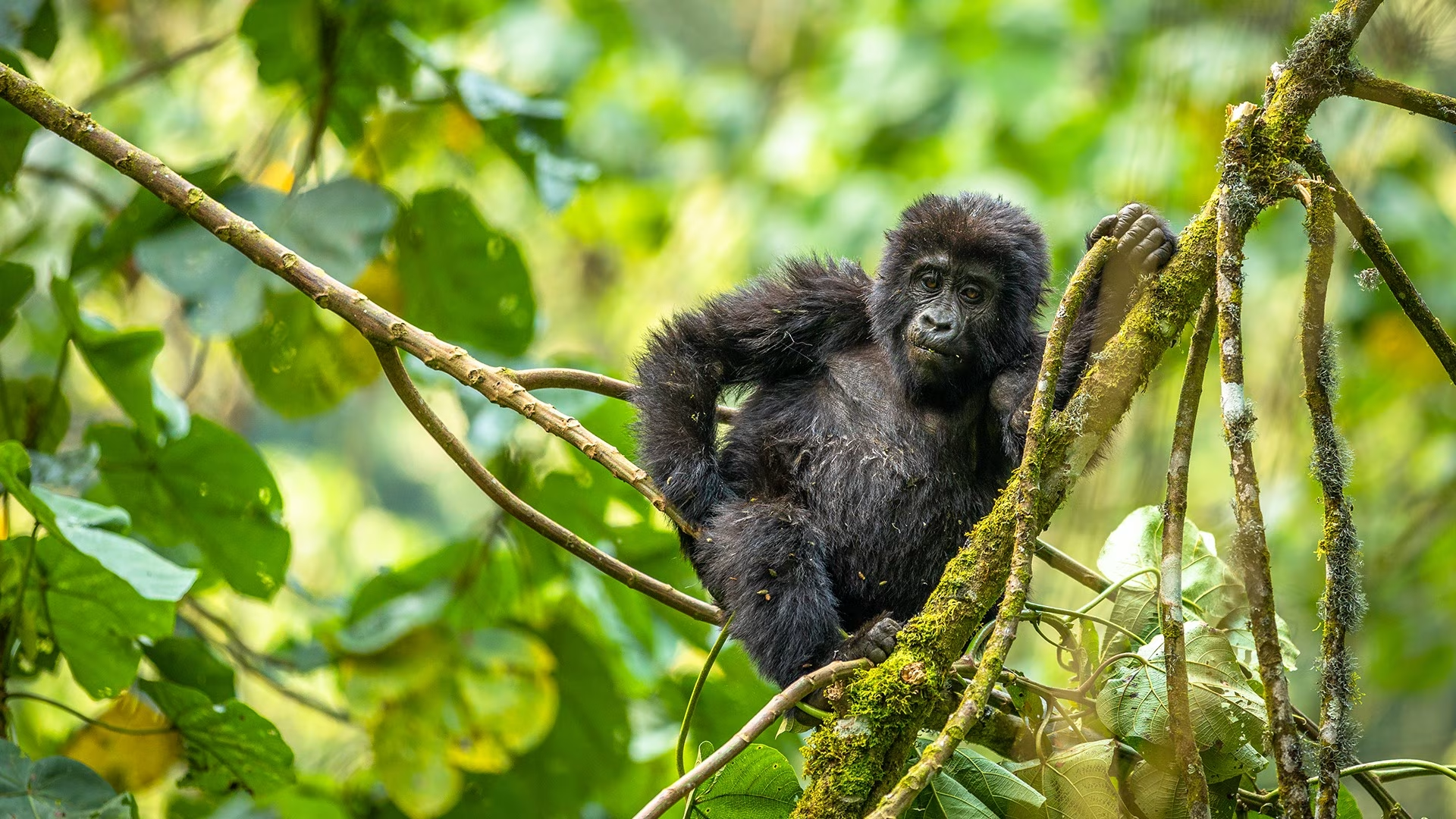
Beyond gorillas, Bwindi offers remarkable biodiversity: 350+ bird species, including Albertine Rift endemics, plus other primates and diverse flora. The forest itself—Africa’s oldest rainforest—is a destination in its own right.
The Four Trekking Sectors: Which One Is Right for You?
Your permit is issued for a specific sector, and sectors are separated by 1–3 hours of driving. Confirm your accommodation is in the same sector as your permit before finalizing your booking. This is one of the most common planning mistakes.
Buhoma Sector (Northern Bwindi)
Character: The historical heart of gorilla trekking—where the first families were habituated. Most established, most accessible, widest range of accommodation.
Terrain: Varied rather than extreme—river crossings, forest paths, moderate climbs. Generally the most predictable experience for first-time trekkers.
Best for: First-time trekkers, families with teenagers (15+), travelers wanting reliable logistics and choice of lodges.
Ruhija Sector (Eastern Bwindi)
Character: Highest elevation (~2,300m), least visited, mist-laden montane forest. Cooler and quieter.
Terrain: Undulating rather than steep, but altitude makes treks feel more demanding. Excellent for birders—high-altitude species abound.
Best for: Birders, travelers seeking solitude, those comfortable with cooler conditions and higher altitude.
Rushaga Sector (Southern Bwindi)
Character: Highest number of habituated gorilla families—making it the most flexible sector for permit availability, especially when other sectors sell out.
Terrain: Varies considerably depending on where your assigned family ranges—from gentler paths to steep hillsides.
Best for: Travelers booking late or during peak season when Buhoma is unavailable; also the base for the Gorilla Habituation Experience.
Nkuringo Sector (Southern Bwindi)
Character: Highest, steepest, most rugged. Sweeping views into Rwanda and the Virunga volcanoes. Lower visitor numbers.
Terrain: The most physically demanding sector—steep ascents and descents, longer hikes. For many, this is precisely the appeal.
Best for: Experienced trekkers, adventure-seekers wanting a wilder, less scripted experience.
What to Expect on Your Trek
The experience begins early in the morning with a briefing on trekking protocol, safety, and gorilla behavior. Treks can last anywhere from 30 minutes to several hours—or up to a full day—depending on where your assigned family has moved since the trackers located them overnight.
The terrain is rugged and often challenging. Paths can be muddy and steep, particularly in wet seasons. Porters are available at every trailhead for approximately USD $15–$20 and are strongly recommended—both for practical comfort and because the fee goes directly to local households.
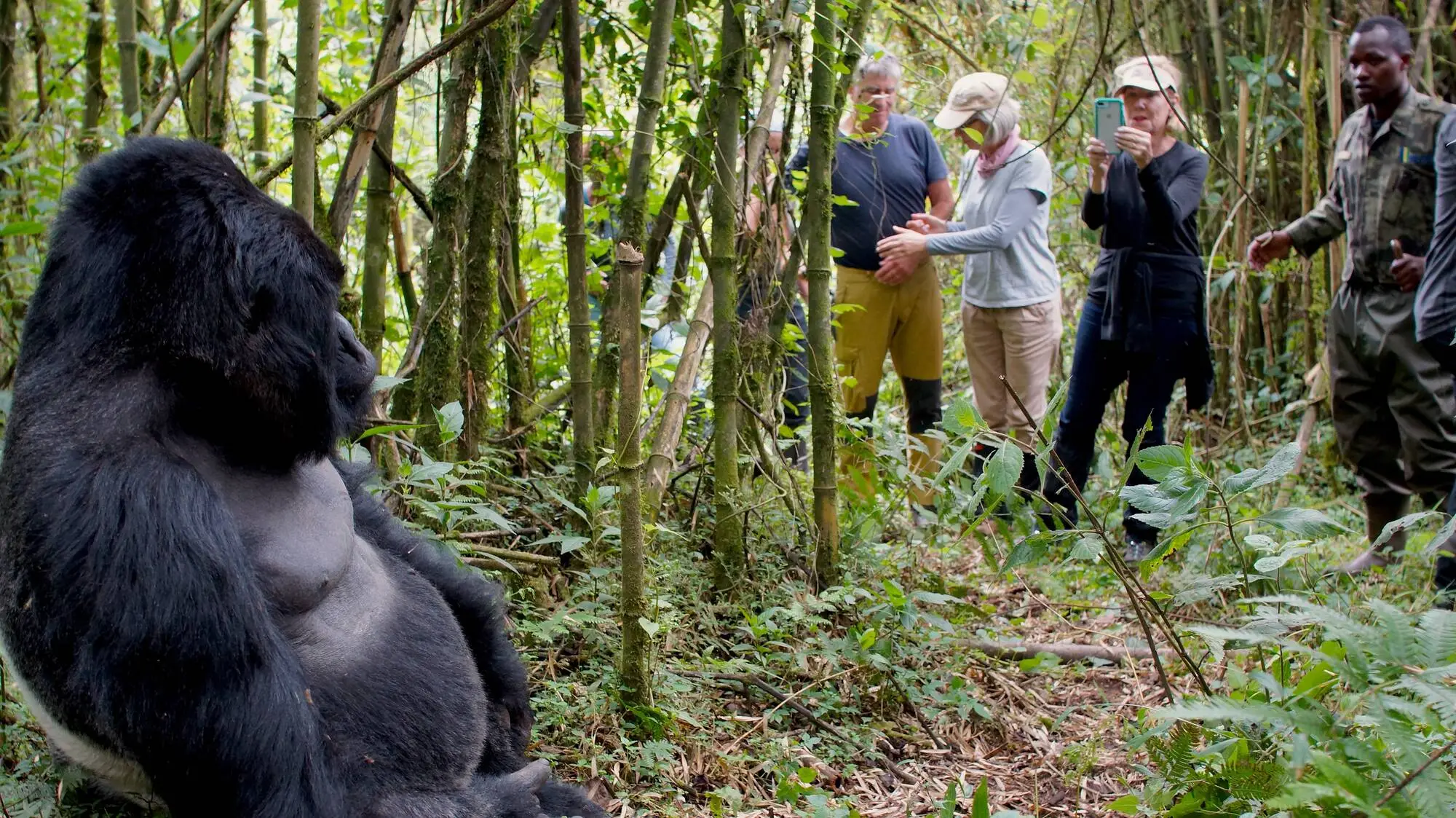
You will spend one hour with the gorillas. Groups are capped at eight visitors per family per day, a conservation measure to minimize disturbance and disease transmission risk. Gorillas share 98% of our DNA, making them susceptible to human respiratory illnesses—if you are unwell, postpone your trek.
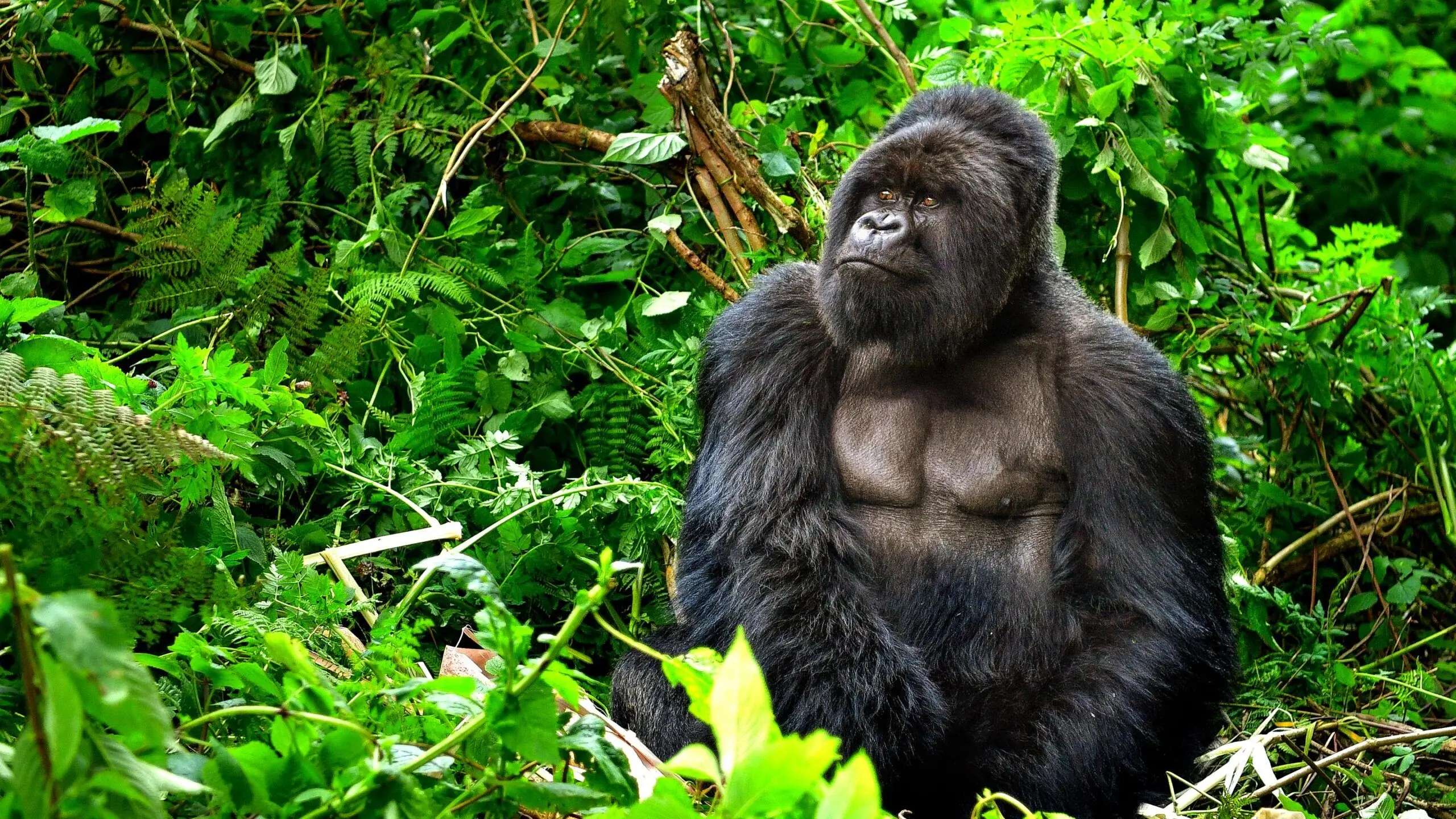
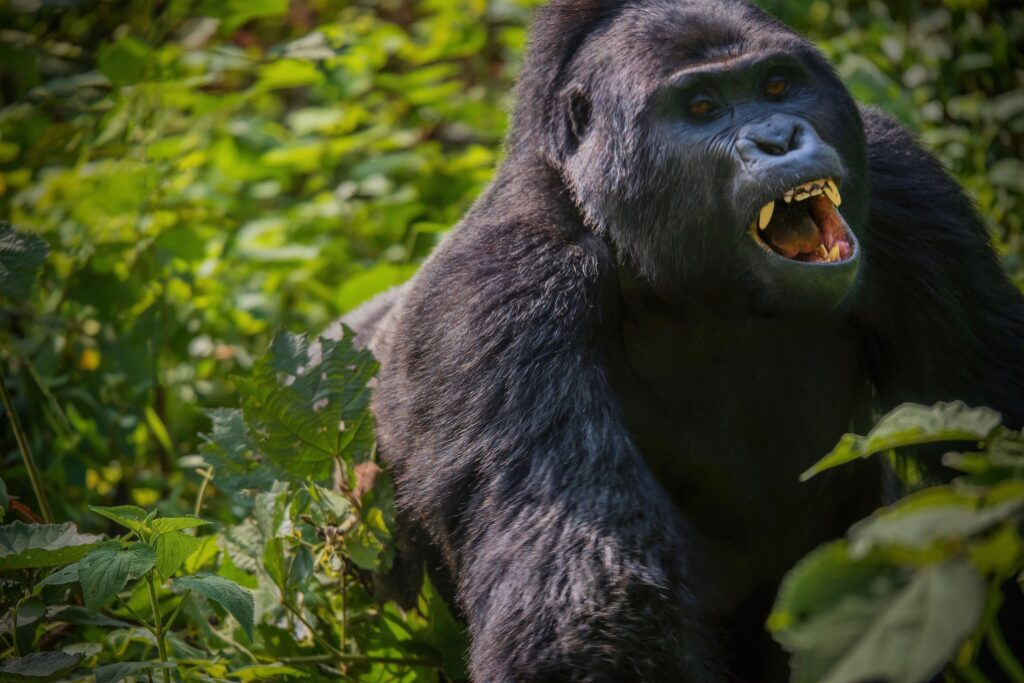
During a June 2026 trek, the first family appeared after just one hour on the trail. A large silverback sat high in the canopy, feeding calmly. The silence in those moments is what stays with visitors.
Best Time to Go: Seasons and Trade-offs
Bwindi has two dry seasons and two wet seasons. Gorilla trekking operates year-round, but conditions vary significantly.
Dry Seasons (Easier Trekking)
Long dry season: June–September. Most reliably dry, firm trails, ideal conditions. Peak tourist season—permits sell out months ahead.
Short dry season: December–February. Cooler, misty mornings, firm trails. Excellent photographic conditions. Holiday demand means permits should be booked early.
Wet Seasons (Atmospheric, Quieter, Cheaper)
Long wet season: March–May. April is typically wettest. Trails are slippery and demanding, but the forest is spectacularly lush. May offers the discounted USD $600 permit rate—a significant saving.
Short wet season: October–November. Moderate to heavy rainfall. November also offers the USD $600 rate. Fewer visitors, more private experience, but muddier conditions.
The low-season trade-off: You save USD $200 per permit, encounter fewer people, and see the forest at its most dramatic. But trails are harder, and low-season permits cannot be rescheduled—travel insurance is essential.
Responsible Gorilla Trekking: Non-Negotiable Practices
The funds generated from permits, guided tours, and tourism activities go toward protecting and monitoring the mountain gorillas, as well as supporting local communities surrounding the park. A portion of every permit—20%—is distributed to communities through the Revenue Sharing Programme.
Essential practices:
- Maintain 7 meters (21 feet) distance from gorillas. Avoid sudden movements or loud noises.
- Follow your guide’s instructions at all times. They are trained to ensure both your safety and the gorillas’.
- Never trek if you are unwell. Human respiratory diseases can be fatal to gorillas.
- Group size is capped at eight to minimize disturbance. This is enforced, not negotiable.
- No flash photography. Respect the moment.
Health precautions: If you have a cold, flu, or any infectious illness, you will not be permitted to trek. This is strictly enforced at the briefing point.
The Local Community and Sustainable Tourism
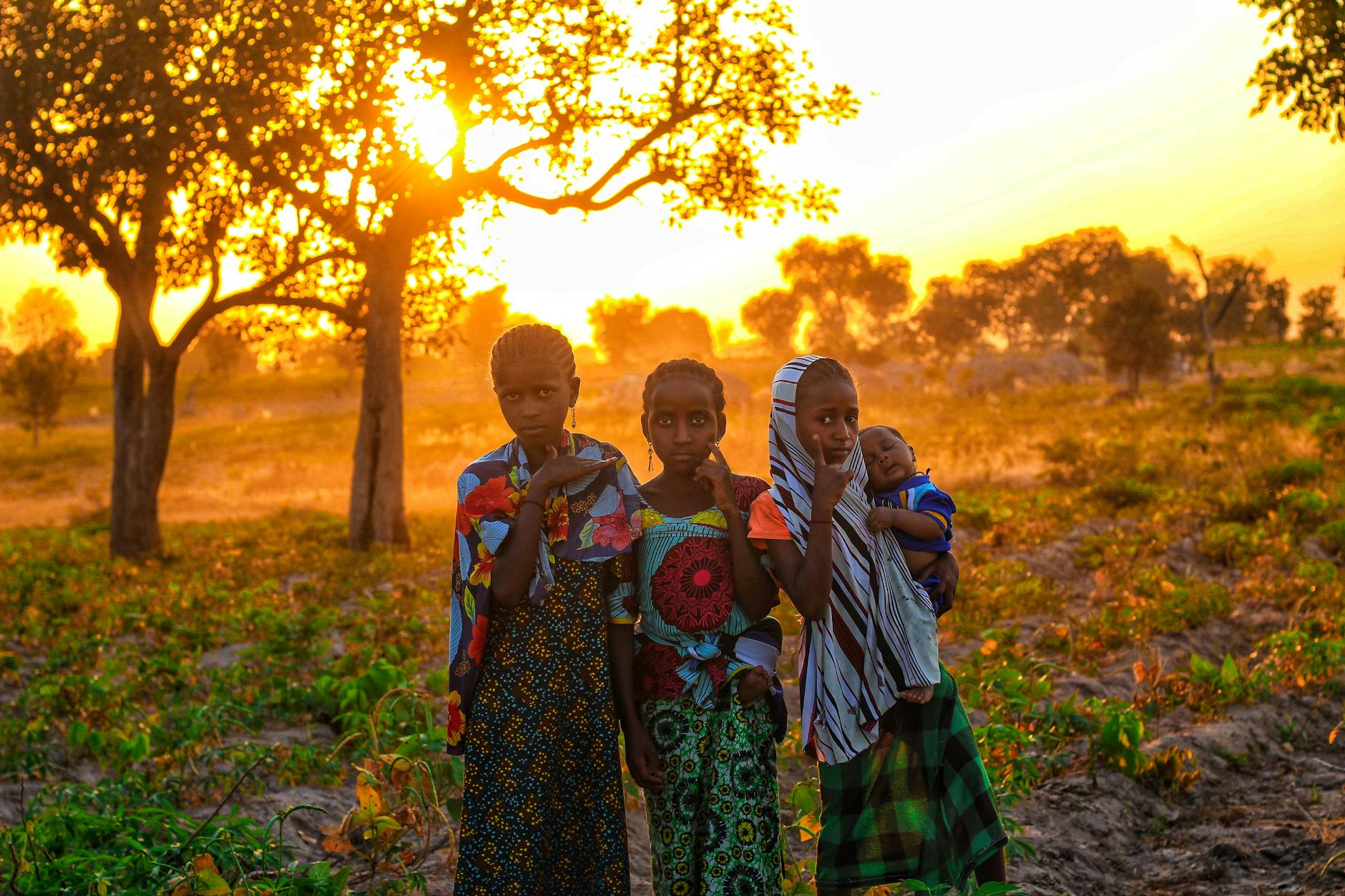
Beyond the gorillas, Bwindi is home to indigenous communities whose lives are intricately tied to the forest. The Batwa people—forest dwellers who lived in harmony with gorillas for generations—were displaced when the park was gazetted. Community tourism now provides economic opportunities and a platform for cultural preservation.
Community initiatives worth supporting:
- Batwa cultural experiences: Traditional music, crafts, storytelling, and farming practices. These are genuine cultural exchanges, not staged performances .
- Ride 4 a Woman (Buhoma): An NGO founded in 2009 that runs guided mountain bike tours through villages, funding vocational training for women .
- NCCDF and Buniga Forest Trail (Nkuringo): A guided walk through Batwa community lands where 70% of proceeds fund community programmes—one of the most transparent revenue models at any Uganda park .
By booking your trek through a responsible operator, you contribute to both wildlife conservation and community empowerment.
Frequently Asked Questions (FAQ)
Q: Is the gorilla permit really USD $800? I’ve seen $900 quoted.
A: The confirmed 2026 rate for foreign non-residents is **USD $800** for standard trekking . Some outdated or inaccurate sources quote $900. Verify directly with UWA or a licensed operator.
Q: How far in advance should I book?
A: 5–6 months ahead for peak season (June–September, December–February); 3–4 months for low season. Peak-season permits and popular lodges sell out .
Q: Can I choose my sector?
A: Yes, subject to availability. Buhoma and Rushaga are most flexible; Ruhija and Nkuringo are more remote with fewer permits. Your permit specifies a sector—book accommodation in that same sector .
Q: What fitness level is required?
A: Moderate to high. Treks can last 1–6+ hours over steep, muddy terrain. Porters are available and strongly recommended. If you have mobility or heart/respiratory conditions, consult your doctor first.
Q: What should I pack?
A: Broken-in hiking boots with ankle support, rain jacket and waterproof bag cover, quick-dry layers, insect repellent, sunscreen, gloves (for vegetation), and a camera without flash. Bwindi is cool at altitude—layers are essential .
Q: Is the one hour with gorillas enough?
A: For most visitors, yes—it is intense and unforgettable. If you want more time, the Gorilla Habituation Experience offers four hours with a semi-habituated family, maximum four guests, for USD $1,500 (2026) .
Book Your Bwindi Gorilla Trekking with Tribes Gorilla Trekking Tours
At Tribes Gorilla Trekking Tours, we are passionate about providing eco-conscious and adventure-driven travel experiences. We handle permits, sector selection, lodge bookings, and every logistical detail—so you can focus on the forest.
Our team responds personally to every inquiry, seven days a week. We advise honestly on sector choice, realistic fitness expectations, and the best season for your priorities.
Email: info@tribesgorillatrekkingtours.com
WhatsApp: +256 757 291 063
Contact us today. Your gorilla family is waiting.